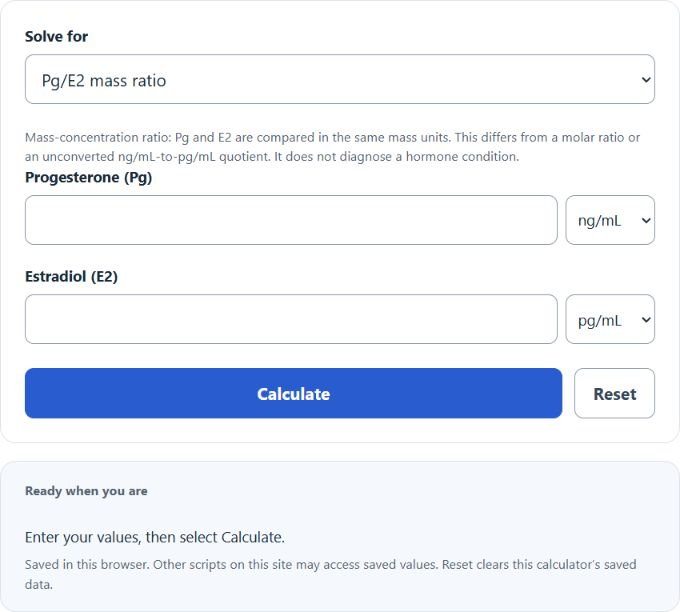
Calculate progesterone, estradiol, or Pg/E2 ratio from any 2 values with ng/mL, nmol/L, pg/mL, or pmol/L unit conversions and steps.
Related Calculators
- Inverse Ratio Calculator
- Cross Ratio Calculator
- Fold To Percentage Calculator
- Variation Constant Calculator
- All Math and Numbers Calculators
Pg/E2 Ratio Formula
The Pg/E2 ratio compares progesterone to estradiol after converting both values to compatible base units. This calculator uses a mass-concentration ratio: progesterone in ng/mL is multiplied by 1,000, then divided by estradiol in pg/mL. This differs from a molar ratio or an unconverted mixed-unit quotient.
- Pg/E2 = progesterone to estradiol ratio, unitless
- Pg = progesterone, in ng/mL after conversion
- E2 = estradiol, in pg/mL after conversion
- 1000 = conversion factor from ng to pg
The ratio is unitless because progesterone is converted from ng/mL to pg/mL before dividing by estradiol. Estradiol cannot be zero when calculating the ratio. Solving for estradiol requires positive progesterone and a positive ratio; zero progesterone and zero ratio do not determine a unique estradiol value.
Pg and E2 Unit Conversions
Use these conversions when comparing lab results reported in different units.
| Measurement | From | To base unit |
|---|---|---|
| Progesterone | ng/mL | multiply by 1 |
| Progesterone | nmol/L | divide by 3.18 to get ng/mL (approximately multiply by 0.314465) |
| Estradiol | pg/mL | multiply by 1 |
| Estradiol | pmol/L | divide by 3.671 to get pg/mL (approximately multiply by 0.272405) |
Reading a Pg/E2 Ratio Result
| Result factor | Why it matters |
|---|---|
| Cycle timing | Progesterone and estradiol change across the menstrual cycle, so timing affects the ratio. |
| Unit consistency | The formula assumes Pg is in ng/mL and E2 is in pg/mL before the ratio is calculated. |
| Lab method | Different labs and test methods can produce slightly different hormone values. |
Quick Example
If your progesterone is 15 ng/mL and your estradiol is 150 pg/mL, the calculation is:
The Pg/E2 ratio is 100. Use the result as a calculation aid, not as a diagnosis. Lab results should be interpreted with symptoms, cycle timing, medications, and clinical context.