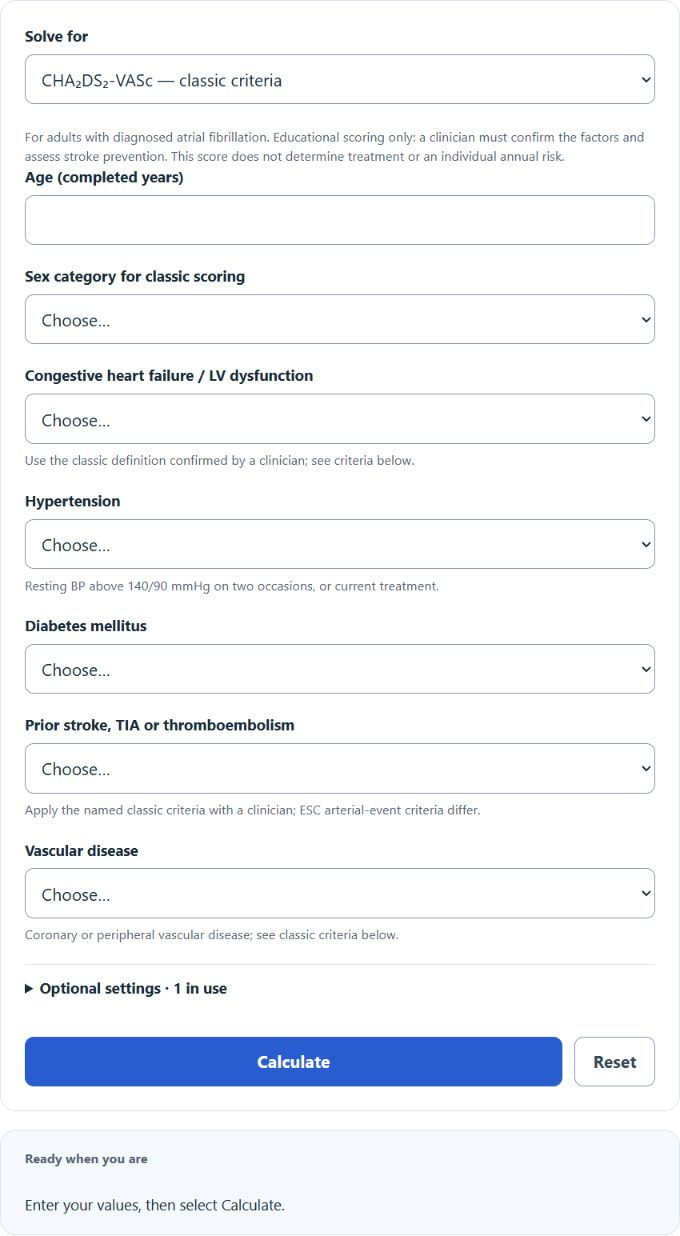
Calculate classic CHA2DS2-VASc or 2024 ESC CHA2DS2-VA points using separate guideline criteria for adults with diagnosed atrial fibrillation. A clinician must assess stroke prevention; the score alone does not determine treatment.
CHA2DS2-VASc Formula
The CHA2DS2-VASc score adds one or two points for each stroke risk factor present in a person with non-valvular atrial fibrillation, using the chosen clinical definitions:
CHA2DS2-VASc = C + H + age points + D + S2 + V + Sc.
The 2024 ESC guideline uses CHA2DS2-VA, which omits the sex point and updates several clinical definitions. Reassess factors under that framework:
CHA2DS2-VA = C + H + age points + D + S2 + V.
Variables:
- C is heart failure meeting the selected guideline definition (1 point)
- H is hypertension, either treated or with blood pressure consistently above 140/90 mmHg (1 point)
- A2 is age 75 years or older (2 points)
- D is diabetes mellitus (1 point)
- S2 is a prior stroke, transient ischemic attack, or thromboembolism (2 points)
- V is coronary or peripheral vascular disease meeting the selected guideline definition (1 point)
- A is age 65 to 74 years (1 point)
- Sc is sex category, scored only when the patient is female (1 point)
Age contributes 0 below 65, 1 at 65–74, or 2 at 75 or older, once only. Maximum scores are 9 (classic) and 8 (ESC VA). Each clinical factor contributes 1 except prior qualifying stroke/TIA/embolism, which contributes 2. Classic mode adds 1 for female sex. The two modes retain separate clinical answers; changing framework requires reassessment. This educational calculator is limited to adults and does not prescribe treatment.
Stroke Risk by CHA2DS2-VASc Score
A higher score generally indicates greater thromboembolic risk, but event rates vary substantially across cohorts. This calculator does not assign an individual annual percentage.
Anticoagulation requires a clinician’s assessment of the appropriate guideline, estimated risk, bleeding factors, other conditions and preferences. A bleeding-risk score alone should not exclude treatment. Do not start or stop medication from this result.
CHA2DS2-VASc Compared With the 2024 ESC CHA2DS2-VA Score
Definitions are drawn from ACC/AHA/ACCP/HRS 2023 Table 10 and ESC 2024 Table 10. Classic heart failure requires signs/symptoms of right or left ventricular failure with objective dysfunction. Classic diabetes uses fasting glucose ≥126 mg/dL (7.0 mmol/L) or glucose-lowering therapy. Classic vascular criteria include coronary disease and specified peripheral disease; the reproduced definitions include pulmonary embolism under thromboembolism and arterial or venous thrombosis under peripheral vascular disease.
ESC heart failure includes symptomatic HF at any ejection fraction or asymptomatic LVEF ≤40%. ESC stroke/embolism is arterial. ESC vascular disease includes prior MI, angina, coronary revascularization or significant imaging CAD, and specified peripheral disease or complex aortic plaque. Complex plaque has mobility, ulceration, pedunculation or thickness ≥4 mm. ESC diabetes uses accepted type 1/2 diagnostic criteria or glucose-lowering therapy. Both score qualifying hypertension, including current treatment. Ask a clinician to confirm each condition; medication taken for another indication does not establish the diagnosis.
Female sex is a risk modifier. The ESC framework omits that point, but its updated factor definitions mean that subtracting one from a classic score is not always a valid ESC reassessment. Conditions outside these scores can change clinical management.
Example Problems
Example 1: A 72-year-old woman has treated hypertension and diabetes and no other risk factors.
Age 72 falls in the 65 to 74 band, so A adds 1. Hypertension adds 1, diabetes adds 1, and female sex adds 1. The classic total is 4. If the same hypertension and diabetes are confirmed under ESC definitions, the ESC VA total is 3. These are point totals, not individual annual probabilities or a treatment prescription.
Example 2: A 60-year-old man has no listed risk factors.
Age 60 is under 65, so it adds nothing, and with no other factors the CHA2DS2-VASc score is 0. If he were 66, age would add 1 point. A clinician must assess management in either case, including relevant conditions outside this score.
Frequently Asked Questions
What CHA2DS2-VASc score means you need blood thinners?
The score supports clinical risk assessment. Current guidelines use risk thresholds alongside the clinical setting, other risk factors and patient preferences. A clinician should determine eligibility and treatment; this calculator deliberately provides neither a medication recommendation nor an annual risk percentage.
Why is the maximum CHA2DS2-VASc score 9 and not 10?
The letters seem to add up to 10 points, but age is only counted once. Being 75 or older scores 2 points and cancels the separate 1 point for age 65 to 74, so the two age rows can never both apply. That caps the classic score at 9 and the sex-neutral CHA2DS2-VA score at 8.
Is the CHA2DS2-VASc score being replaced?
ESC 2024 uses CHA2DS2-VA, while the ACC/AHA framework continues to reference CHA2DS2-VASc. Their definitions differ as explained above. Select the appropriate framework with a clinician and enter its factors separately.