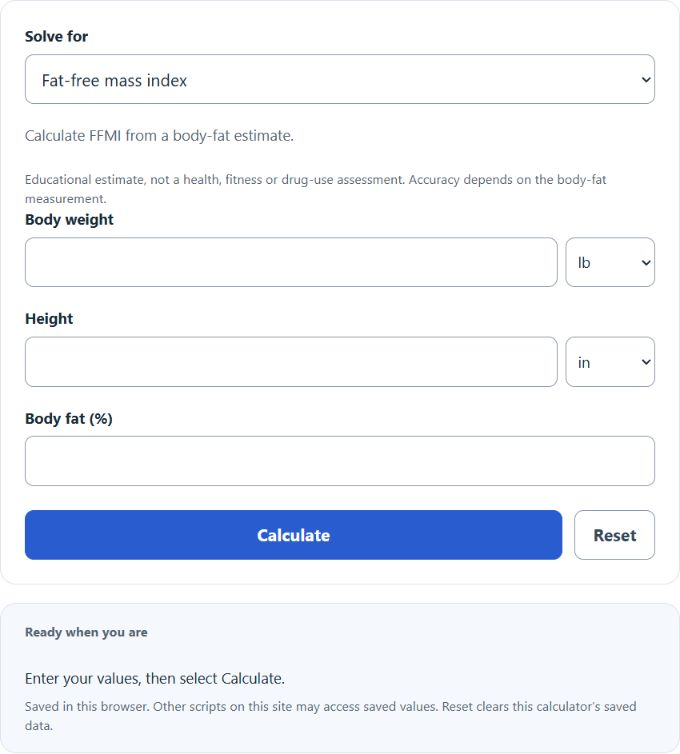
Calculate FFMI from weight, height, and body fat percentage, or solve for missing weight, height, or body fat in metric or imperial units.
Disclaimer: This calculator is for educational use only and is not medical advice. FFMI depends heavily on the accuracy of your body-fat estimate (methods like BIA, calipers, and DEXA can differ). Do not use this tool to diagnose or treat any condition; if you are under 18, pregnant, have an eating disorder history, or have a medical condition affecting weight/body composition, consult a qualified clinician for personalized guidance.
FFMI Formula
The following formula is used by this calculator to determine your FFMI:
- Where FFMI is the fat-free mass index (kg/m²), including when weight and height are entered in imperial units
- w is your body weight (kg) (this calculator converts from lb to kg when needed)
- bf is your body fat percentage (%)
- h is your height (meters)
FFMI Definition
FFMI stands for Fat-Free Mass Index. It is a measure of an individual’s fat-free (lean) mass relative to their height. FFMI can be useful for comparing muscularity between people of different heights, tracking changes over time, and providing additional context alongside metrics like BMI and body fat percentage.
What does my FFMI mean?
A higher FFMI means more fat-free mass relative to height squared. It is not a clinical threshold or a drug-use test. The often-cited value of 25 came from a preliminary study of male athletes using a height-adjusted index; this calculator returns the unadjusted index. Body-fat measurement error and population differences limit comparisons.
Because FFMI is based on fat-free mass and height, it primarily changes when your fat-free mass changes (for example, by gaining or losing muscle and other lean tissue). Losing fat can improve your body fat percentage, but it does not automatically increase FFMI unless you maintain or increase your fat-free mass. Likewise, gaining muscle can lower, raise, or maintain body fat percentage depending on whether fat mass changes.
What is a healthy FFMI?
There is no single “healthy” FFMI value. Interpretation depends on age, sex, population, measurement method and clinical context. Use appropriate published reference data and qualified clinical guidance rather than treating general fitness ranges as universal targets.
Frequently Asked Questions (FAQ)
How can I calculate my body fat percentage for the FFMI formula?
You can calculate your body fat percentage using various methods, such as bioelectrical impedance analysis (BIA) devices, skinfold measurements with calipers, or more precise methods like DEXA scans. Online calculators are also available if you have measurements like your waist, neck, and hip circumference.
Is FFMI a better indicator of fitness than BMI?
FFMI is often considered more informative about body composition than BMI for individuals who are very muscular, because it focuses on fat-free mass rather than total body mass. BMI can categorize very muscular individuals as overweight or obese, while FFMI can provide a clearer picture of leanness and muscularity.
How can I improve my FFMI?
Improving your FFMI generally involves increasing fat-free mass (for example through progressive resistance training) while maintaining or reducing fat mass. Adequate protein intake, sufficient calories to support training (depending on your goal), sleep, and consistency are key.
Are there any risks associated with a high FFMI?
A very high FFMI can reflect high lean mass, but it can also be influenced by inaccurate body fat estimates and other measurement issues. If you feel distressed or pressured by body composition numbers, consider speaking with a qualified health professional and focus on sustainable training, nutrition, and overall well-being.