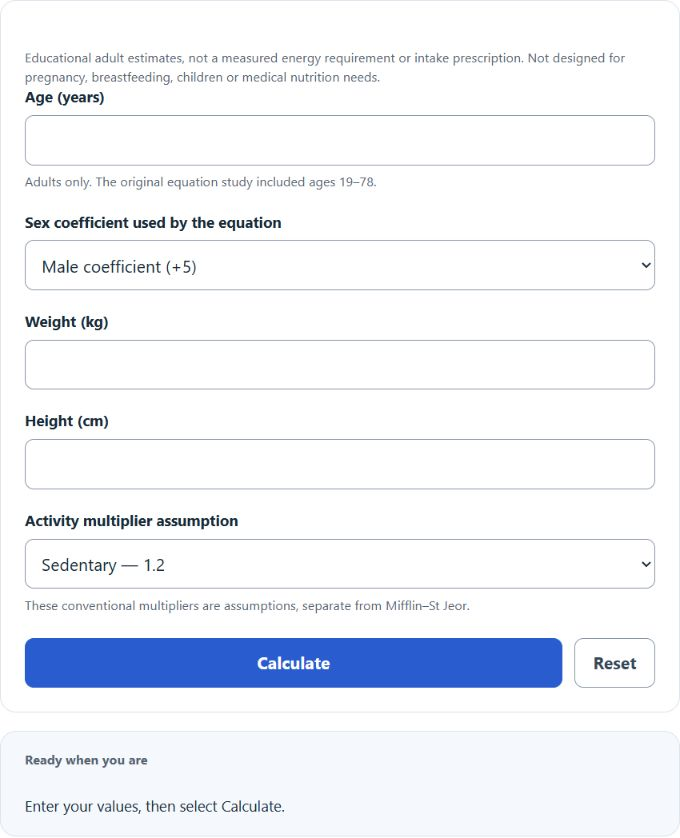
Estimate adult resting energy expenditure with Mifflin–St Jeor, then apply a stated activity multiplier to estimate daily maintenance energy.
Disclaimer: This calculator provides an educational estimate only and is not medical advice. It does not account for medical conditions, medications, pregnancy/lactation, or a history of eating disorders. For general safe weight-loss guidance, check public-health resources such as the CDC “Healthy Weight” pages or NIH/NIDDK materials, and talk to a clinician or registered dietitian for personalized recommendations.
- All Health and Medical Calculators
- Body Fat Calculator
- Ideal Weight Calculator
- Katch-McArdle Calculator
- Minimum Calories Calculator
- REE (Resting-Energy-Expenditure) Calculator
Calorie Intake Formula
Understanding and estimating the number of calories you burn is the first step in any program for weight loss or gain, but it’s also important for individuals trying to maintain weight.
How is this calculated? To do that we need to visit the key component of this calculator, BMR.
BMR means basal metabolic rate, measured under strict resting conditions. This calculator uses the Mifflin–St Jeor resting-energy equation, derived from healthy adults aged 19–78. It predicts resting expenditure rather than measuring your individual requirement; body composition and other factors can affect accuracy.

- BMR = basal metabolic rate (kcal/day)
- w = weight (kg)
- h = height (cm)
- a = age (years)
- s = constant (+5 for men / −161 for women)
Now that we have an estimate of the calories you burn at rest, we apply an activity factor to estimate your total daily energy expenditure (TDEE). This factor varies because “working out” can mean very different intensities, so treat the result as an estimate.
The calculator also shows maintenance minus 500 and plus 300 kcal/day as arithmetic scenarios. They are not personal intake prescriptions. A 3,500-kcal-per-pound rule is a rough energy equivalent, not a prediction of exact weekly weight change: expenditure and body composition change over time. NIH weight-change research models these changes dynamically.
Calories Burned Calculator
What’s unique about the calculator above is that it takes into account your activity level and uses that to estimate your total daily calorie needs. Your activity can vary day to day, so many people track weekly averages to smooth out fluctuations.
Clear and simple, the best way to increase the total amount of calories you burn each day is by increasing your activity. Play around with the calculator above to see just how much this can affect you.
Weight Loss Calorie Calculator
Not only can this calculator estimate the number of calories you need to eat in order to maintain weight, but it can also estimate the calories you need to consume in order to lose weight.
An appropriate calorie deficit depends on individual energy needs, health and nutritional adequacy. The −500-kcal scenario above is illustrative and may be unsuitable, particularly when the resulting intake is low. A clinician or registered dietitian can assess an individualized plan; this calculator does not establish a safe minimum intake or a guaranteed weight-loss rate.
Losing Weight
You can use this calculator to determine a baseline for losing weight. When you try to lose weight it’s important to weigh yourself on the same day every week at roughly the same time. Your body weight can fluctuate by several pounds per day due to water, glycogen, and food volume, so it’s important to weigh yourself consistently.
The most important phrase to remember when trying to lose weight is this:
Calories in, Calories out
In other words, fat loss requires that you take in less energy than you expend over time. You can achieve this in two different ways: eat less, exercise more, or (most commonly) some combination of both. Many factors (appetite, water retention, adaptive changes in metabolism, and tracking error) can affect what you see on the scale day to day, but they do not change the underlying principle of energy balance.
An additional aspect of losing weight that is important is your protein intake. Protein is essential in building and maintaining muscle. If you’re in a caloric deficit, your body can lose both fat and lean mass. Getting enough protein (and doing resistance training) can help reduce muscle loss during this time.
Weight Loss Supplements
Some products marketed as “weight-loss supplements” may slightly affect appetite or energy, but evidence is often limited and results (when present) are usually modest. Dietary supplements are not FDA-approved as weight-loss treatments, and product quality/contents can vary—some supplements have been found to contain hidden stimulants or drug-like ingredients. If you choose to use any supplement, talk with a clinician/pharmacist first, especially if you have high blood pressure, heart disease/arrhythmias, anxiety, diabetes, are pregnant/breastfeeding, or take prescription medications.
1) Thermogenics
Some stimulant ingredients can slightly increase energy expenditure, but sustained weight-loss benefits are uncertain and tolerance can reduce caffeine’s effects. They can cause sleep disturbance, anxiety, faster heart rate or higher blood pressure, and may interact with medicines. See the NIH Office of Dietary Supplements evidence summary.
2) Stimulants/Appetite Suppressant.
Stimulant-based products and “appetite suppressants” don’t directly “burn fat,” but they can make some people feel less hungry. However, stimulants can raise heart rate and blood pressure, worsen anxiety, interfere with sleep, and interact with medications. Avoid exceeding label directions, and do not combine multiple stimulant products. If you experience chest pain, fainting, severe palpitations, or shortness of breath, seek medical care.
3) Surgery
Although they are not supplements, some medical procedures (such as bariatric surgery) can lead to significant weight loss by reducing appetite, limiting food intake, and/or changing digestion. These procedures are expensive and can come with serious health risks, so they should be considered only with guidance from qualified healthcare professionals.