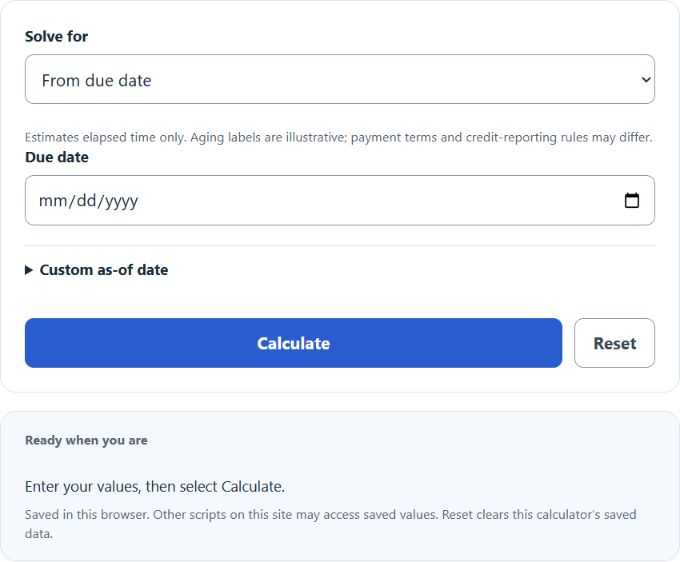
Calculate months overdue from a due date or days overdue, and see the aging bucket for current, recently overdue, past due, or delinquent status.
Months Overdue Formula
From a due date and an as-of date, the calculator counts whole calendar months elapsed, then adds the leftover days as a fraction of the next month:
- FullMonths = number of complete calendar months from the due date to the as-of date
- RemainingDays = days between the last monthly anchor and the as-of date
- DaysInNextMonth = days between consecutive monthly anchors. Each anchor keeps the original due-date day, clamped to the target month’s last day.
From a raw days-overdue input, the calculator uses the average month length:
- DaysOverdue = whole days past the due date
- 30.4375 = average days per month (365.25 / 12)
Calendar-based mode respects actual month lengths using the stated monthly-anchor convention. Check your payment terms for the applicable overdue definition. The days-based mode is an approximation when you only know an aging count.
Aging Buckets and Reference Values
The calculator uses the following illustrative aging brackets. Labels do not establish contractual or credit-reporting status:
| Days Overdue | Months (approx.) | Status |
|---|---|---|
| 0 | 0 | Current |
| 1–30 | 0–1 | Recently overdue |
| 31–60 | 1–2 | Past due |
| 61–90 | 2–3 | Seriously delinquent |
| 91+ | 3+ | Severely delinquent |
For quick mental math, common day counts convert as follows:
| Days | Months |
|---|---|
| 15 | 0.49 |
| 30 | 0.99 |
| 45 | 1.48 |
| 60 | 1.97 |
| 90 | 2.96 |
| 120 | 3.94 |
| 180 | 5.91 |
| 365 | 11.99 |
Example
An invoice was due on January 15, 2025. The as-of date is April 28, 2025.
- Full calendar months from Jan 15 to Apr 15 = 3
- Remaining days from Apr 15 to Apr 28 = 13
- Days in the next month (Apr 15 to May 15) = 30
- Months overdue = 3 + (13 / 30) = 3.43 months (103 days, severely delinquent)
FAQ
Why don't 30 days equal exactly 1 month? Calendar months range from 28 to 31 days. Calendar-date results depend on the actual dates. In days-overdue mode, 30 / 30.4375 is approximately 0.99 months.
Does the due date itself count as overdue? No. The first overdue day is the day after the due date.
Which mode should I use? Use From Due Date when you have the original date. It accounts for short and long months. Use From Days Overdue when an aging report only gives you a day count.
Can I check overdue status as of a past or future date? Yes. Open Custom as-of date and choose a date. Leaving it blank uses your device’s current date.