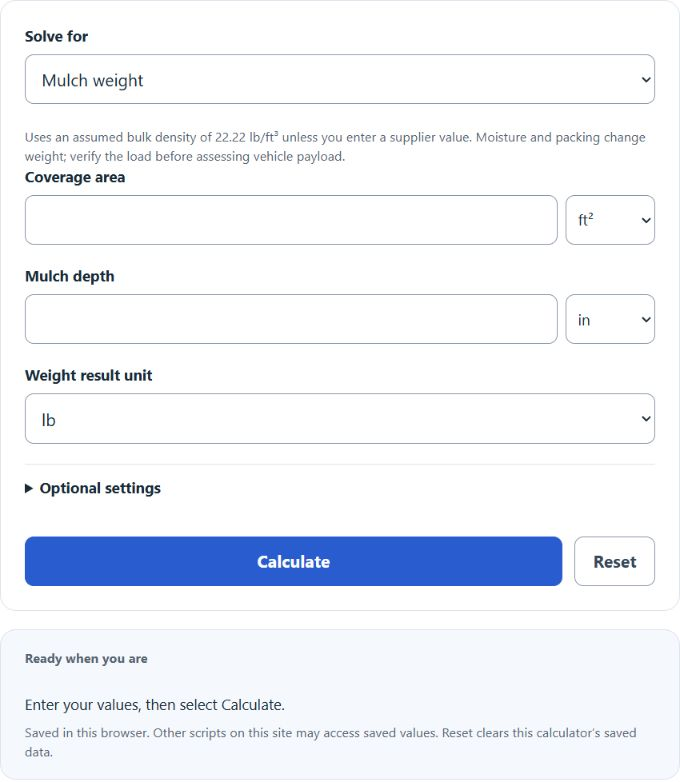
Calculate mulch weight, area, or depth from two known values using sq ft, sq m, sq yd, in, ft, cm, m, lb, kg, short tons, and metric tons.
Understanding the Mulch Weight Calculator
The mulch weight calculator estimates how heavy a mulch layer will be after you choose a coverage area and an installed depth. This is useful for planning delivery, checking truck or trailer payload, estimating lifting effort, and comparing bagged mulch to bulk orders.
At its core, the calculation is simple: convert area and depth into volume, then multiply that volume by an assumed average mulch bulk density.
In this version of the formula, M is the mulch weight in pounds, A is the area in square feet, and D is the depth in inches. The constant 22.22 is the original assumed bulk density in pounds per cubic foot, not a universal measured average. Use a supplier density for your material when available.
Equivalent Volume Formulas
If you order bulk mulch by the cubic yard, it is often helpful to convert the project size into yards first and then connect that volume to weight.
Here, Y is mulch volume in cubic yards. The 600 lb per cubic yard figure is rounded: 22.22 × 27 = 599.94 lb per cubic yard. These estimates assume that density; actual mulch weight varies with material and moisture.
How to Use the Calculator
- Measure the total area to be mulched.
- Choose the average installed depth you want after spreading and leveling.
- Enter the values in any supported units.
- Read the estimated weight in pounds, kilograms, short tons, or metric tons.
- Use the result to plan transport, delivery, storage, or labor requirements.
Quick Reference: Weight per 100 Square Feet
The table below assumes the original 22.22 lb per cubic foot planning density. It is a fast way to estimate how weight changes as depth increases.
| Depth | Volume | Approximate Weight |
|---|---|---|
| 1 inch | 0.31 cubic yards | 185 lb |
| 2 inches | 0.62 cubic yards | 370 lb |
| 3 inches | 0.93 cubic yards | 556 lb |
| 4 inches | 1.23 cubic yards | 741 lb |
| 5 inches | 1.54 cubic yards | 926 lb |
| 6 inches | 1.85 cubic yards | 1,111 lb |
Example Calculation
For a mulch bed with an area of 300 square feet and a depth of 5 inches:
That is approximately 1.39 short tons or 1,260 kilograms. This size project is large enough that weight matters for hauling, unloading, and distribution across the site.
Common Depth Guidelines
| Application | Typical Depth | Notes |
|---|---|---|
| Refreshing an existing mulch bed | 1 to 2 inches | Useful when an older layer has settled but does not need full replacement. |
| New ornamental beds | 2 to 3 inches | Common balance between appearance, weed suppression, and manageable material use. |
| Paths or non-planting zones | 3 to 4 inches | Often chosen where foot traffic or stronger surface coverage is needed. |
| Heavy buildup around plants | Use caution above 4 inches | Keep mulch pulled back from trunks, stems, and crowns. |
Why Actual Mulch Weight Can Differ
The calculator gives a solid planning estimate, but real mulch weight can vary because mulch is not a perfectly uniform material. Actual bulk density changes with:
- Moisture content
- Wood species and bark content
- Shredded versus chunky texture
- Compost or soil mixed into the load
- How tightly the material is packed during delivery or storage
Dry decorative bark is usually lighter than damp shredded hardwood, and freshly rained-on mulch can weigh substantially more than a dry estimate. If you are close to a vehicle payload limit, allow extra safety margin.
Planning Tips
- Use volume to order mulch, but use weight to plan hauling and labor.
- Check payload ratings for pickups, trailers, wheelbarrows, and lifts before loading.
- Large projects are often easier to manage in multiple deliveries rather than one very heavy load.
- If the mulch will settle after spreading, plan the target depth based on the finished layer you want, not just the loose pile height.
- For sloped or irregular beds, measure carefully and add a modest buffer for waste and touch-up coverage.
When This Calculator Is Most Useful
This calculator is especially helpful when you need to estimate the weight of landscape mulch for transport logistics, compare bagged versus bulk material, determine whether a load is reasonable for hand moving, or convert a landscaping plan into a more realistic delivery estimate. Because weight scales directly with both area and depth, even a small increase in thickness can add hundreds of pounds across a large bed.