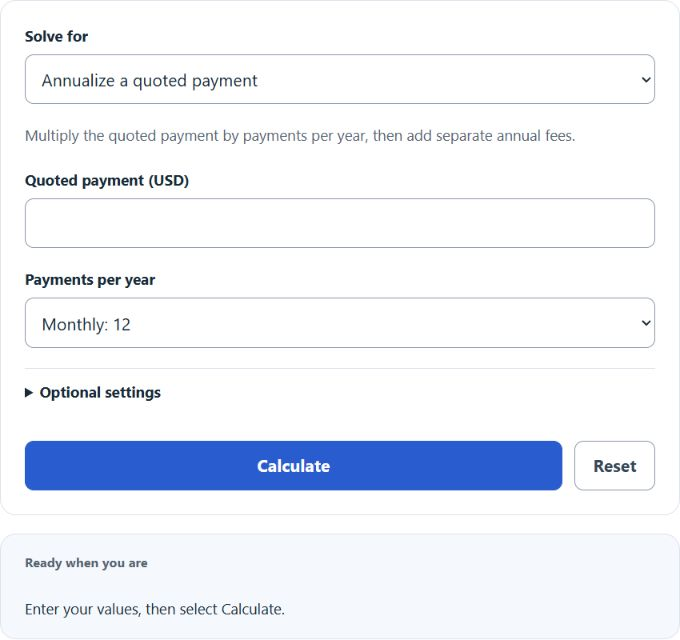
Annualize weekly, monthly, quarterly, or semiannual premiums, or estimate annual cost from coverage and a quoted rate with fees, discounts, and projections.
Annual Insurance Premium Formula
The following formula is used to calculate the annual insurance premium from a monthly premium over 12 months, before separate annual fees.
Variables:
- A is the annual premium
- M is the monthly premium
- N is 12 months for a full year
To calculate the annual premium, multiply the monthly premium by 12, then add any separate annual fees. A shorter policy period gives a period cost rather than a full annual cost. The coverage-rate method uses coverage / 1,000 × annual rate × (1 − discount / 100) + fees.
What is an Annual Insurance Premium?
An annual insurance premium is the total amount of money that an individual or business must pay for an insurance policy over the course of a year. This premium can be paid in a lump sum or in installments, such as monthly or quarterly payments. The annual premium is determined by various factors, including the type of insurance, the coverage amount, the policyholder’s risk profile, and other underwriting criteria. Understanding the annual premium is crucial for budgeting and ensuring that you maintain continuous coverage.
How to Calculate Annual Insurance Premium?
The following steps outline how to calculate the Annual Insurance Premium.
- First, determine the monthly premium (M).
- Next, use 12 months (N) to annualize a monthly premium.
- Finally, calculate the annual premium using the formula A = M * N.
- After inserting the values and calculating the result, check your answer with the calculator above.
Example Problem :
Use the following variables as an example problem to test your knowledge.
Monthly premium (M) = $100
Number of months (N) = 12. With no separate fees, annual premium = $100 × 12 = $1,200.