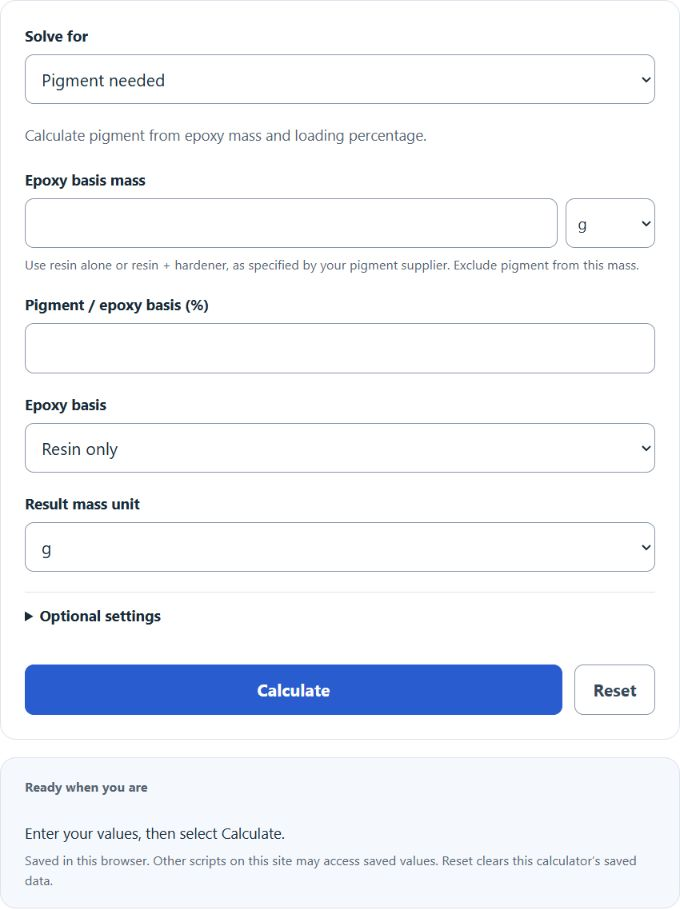
Calculate epoxy pigment needed, pigment-to-resin ratio, or resin amount from any two values with grams, kilograms, ounces, or pounds.
Related Calculators
- Self-Leveling Coverage Calculator
- Carpet Waste Calculator
- Sand Filling Quantity + Coverage Calculator
- Mural Cost Calculator
- All Construction Calculators
Epoxy Pigment Formula
The epoxy pigment calculator uses the pigment percentage to relate the amount of epoxy resin to the amount of pigment needed. Choose the variable to solve and enter its two known quantities.
- P = epoxy pigment needed
- R = epoxy resin amount
- Q = pigment-to-epoxy ratio, as a percent
The calculator also converts mass units before solving. Grams are used as the internal base unit, then the result is converted back to the unit you selected.
- To calculate pigment needed: enter the epoxy resin amount and pigment ratio. The calculator multiplies the resin mass by the percentage.
- To calculate pigment ratio: enter the resin amount and pigment amount. The calculator divides pigment by resin, then multiplies by 100.
- To calculate epoxy resin amount: enter the pigment amount and pigment ratio. The calculator solves backward to find the resin mass that matches that pigment loading.
Illustrative Epoxy Pigment Ratios
The table below is illustrative, not a recommended loading for every product. Actual loading and its mass basis depend on the product and epoxy system. Follow both manufacturers’ instructions.
| Pigment type | Illustrative loading | Notes |
|---|---|---|
| Mica powder | 1% to 5% | Often used for shimmer and metallic effects. |
| Liquid epoxy pigment | 1% to 6% | Add gradually to avoid overloading the resin. |
| Opaque paste pigment | 2% to 10% | Higher loading can affect cure if the product is not designed for it. |
| Alcohol ink or dye | 0.5% to 3% | Used for transparent color effects. |
Mass Unit Conversions Used
| Unit | Equivalent in grams |
|---|---|
| 1 gram | 1 g |
| 1 kilogram | 1000 g |
| 1 ounce | 28.349523125 g |
| 1 pound | 453.59237 g |
Example Problems
Example 1: Calculate pigment needed
You have 500 g of epoxy resin and want a 3% pigment ratio.
You need 15 g of epoxy pigment.
Example 2: Calculate pigment ratio
You added 2 oz of pigment to 5 lb of epoxy resin.
First convert both values to grams:
Then calculate the ratio:
The pigment ratio is 2.5%.
FAQ
Is the pigment ratio based on resin only or total mixed epoxy?
The formula is based on the epoxy mass you enter. If your pigment instructions say to use a percentage of the total mixed epoxy, enter the combined resin and hardener weight. If the instructions specify resin weight only, enter only the resin amount.
Can too much pigment affect epoxy curing?
Yes. Excess pigment can interfere with curing, reduce hardness, create soft spots, or change the finish. This is especially important with liquid pigments, inks, and products not made specifically for epoxy. Stay within the pigment supplier’s recommended maximum when possible.
Should epoxy pigment be measured by weight or volume?
Weight is usually more accurate because pigments vary in density. This calculator uses mass units such as grams, kilograms, ounces, and pounds. For consistent color from batch to batch, weigh both the epoxy and pigment instead of estimating by drops, teaspoons, or cups.