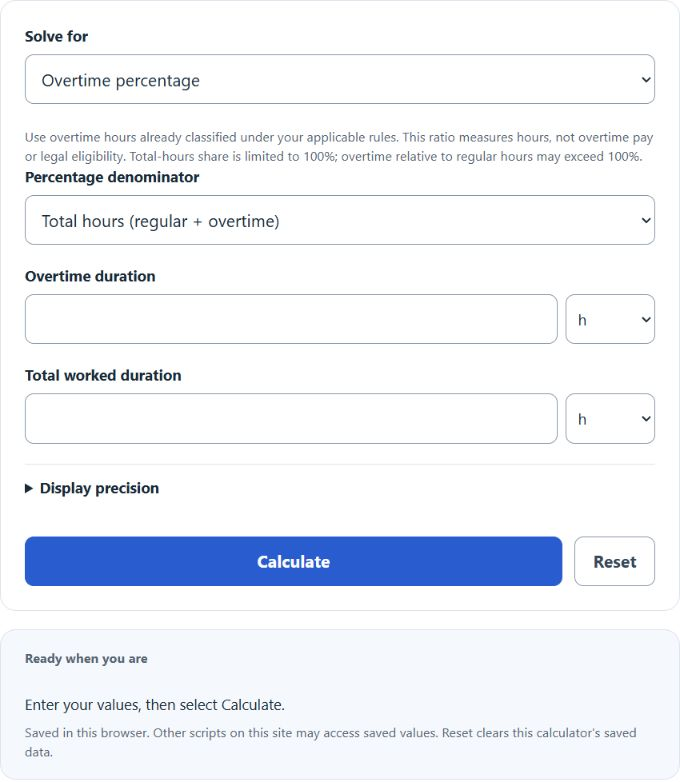
Calculate overtime as a percentage of total or regular hours, or solve for overtime and comparison hours, with a clear workload breakdown.
Overtime Percentage Formula
Variables:
- OVP is the Overtime Percentage (%)
- OT is the total overtime time (hrs)
- TT is the total work time (hrs)
For the total-hours basis, divide overtime hours by all worked hours and multiply by 100. For the regular-hours basis, use regular hours as the denominator instead. The total share cannot exceed 100%; the regular-hours ratio can. The inverse modes solve overtime or comparison hours from the same relationship.
How to Calculate Overtime Percentage?
The following steps outline how to calculate the Overtime Percentage.
- First, determine the total overtime time (hrs).
- Next, determine the total work time (hrs).
- Next, gather the formula from above: OVP = OT / TT * 100.
- Select Calculate. In the example below, 6 / 80 × 100 = 7.5%. For a known positive denominator, zero overtime gives 0%. When solving comparison hours, zero overtime at 0% is indeterminate.
- After inserting the variables and calculating the result, check your answer with the calculator above.
Example Problem :
Use the following variables as an example problem to test your knowledge.
total overtime time (hrs) = 6
total work time (hrs) = 80
FAQs
What is considered overtime work?
Overtime classification depends on worker coverage, jurisdiction, contracts and the applicable work period. Under the ordinary US federal rule, covered nonexempt workers generally receive overtime after 40 worked hours in one fixed workweek, with exceptions. This calculator takes hours already classified; it does not determine eligibility. See DOL Fact Sheet 23.
How does overtime pay differ from regular pay?
The pay rate and required premium depend on applicable rules. For covered nonexempt employees under the ordinary US federal rule, overtime is generally at least 1.5 times the applicable regular rate. This hours-percentage calculator does not calculate earnings or determine a legal regular rate.
Can overtime percentage impact employee productivity?
Yes, while some overtime can be beneficial for meeting project deadlines, excessive overtime can lead to employee burnout, decreased productivity, and health issues.
Are there any legal regulations regarding overtime?
Yes, many countries have specific labor laws regulating overtime work, including how it is compensated and the maximum number of overtime hours an employee can work. Employers must comply with these regulations to avoid legal issues.