150 grams is about 3/4 cup sugar, 1 1/4 cups flour, 10.6 tbsp butter, or 10.1 tbsp water. Convert 150g to cups, tablespoons, and teaspoons by ingredient.
150 Grams to Cups Converter
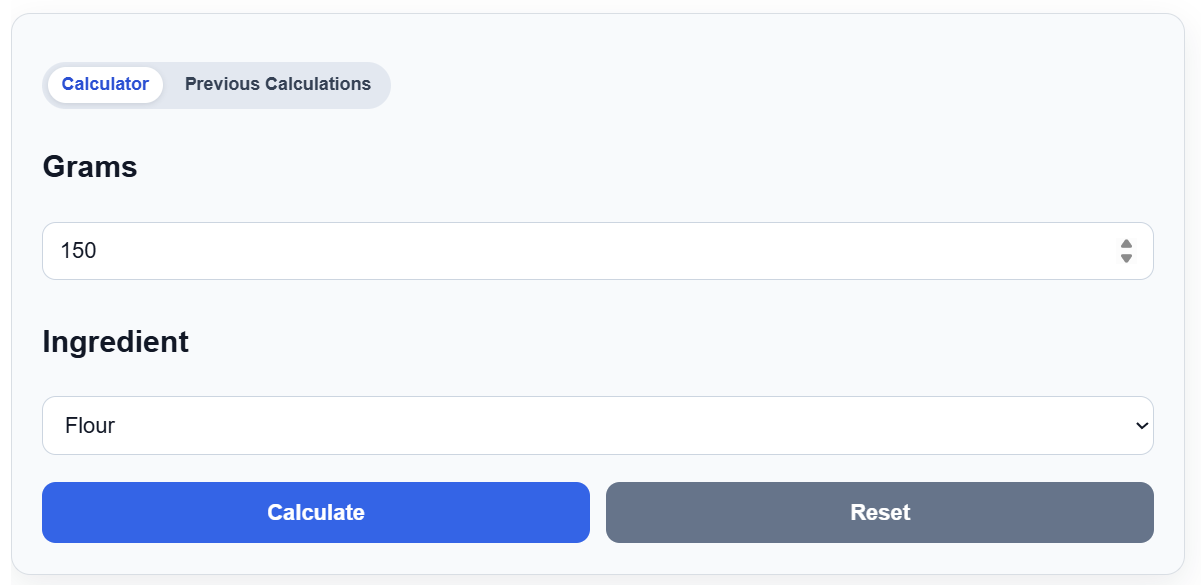
This converter is designed specifically for the 150-gram recipe amount. Rather than applying one fixed cup value, it calculates a different answer for each ingredient based on its density. For example, 150 grams works out to about 3/4 cup of granulated sugar, 1.25 cups of flour, 0.66 cups of butter, and 0.63 cups of water.
Using each ingredient’s approximate grams-per-cup value, the calculator converts 150 grams into cups, tablespoons, and teaspoons. Because cups measure volume and grams measure weight, thick and heavy ingredients like honey, molasses, and peanut butter fill far fewer cups than light, airy ones like oats, cocoa powder, almond flour, or powdered sugar.
150 Grams to Cups, Tablespoons, and Teaspoons Table
Below is a full reference table showing what 150 grams equals in cups, tablespoons, and teaspoons for every ingredient. It is a handy guide whenever a recipe calls for 150g and you want a quick volume estimate without reaching for your scale.
| Ingredient | Approx. Grams per Cup | 150 Grams to Cups | 150 Grams to Tbsp | 150 Grams to Tsp |
|---|---|---|---|---|
| Flour | 120 g | 1.25 | 20 | 60 |
| All-Purpose Flour | 120 g | 1.25 | 20 | 60 |
| Plain Flour (UK) | 125 g | 1.2 | 19.2 | 57.6 |
| Bread Flour | 127 g | 1.181 | 18.9 | 56.69 |
| Almond Flour | 96 g | 1.563 | 25 | 75 |
| Sugar | 200 g | 0.75 | 12 | 36 |
| Granulated Sugar | 200 g | 0.75 | 12 | 36 |
| White Sugar | 200 g | 0.75 | 12 | 36 |
| Caster Sugar | 225 g | 0.667 | 10.67 | 32 |
| Brown Sugar, Packed | 220 g | 0.682 | 10.91 | 32.73 |
| Powdered Sugar | 120 g | 1.25 | 20 | 60 |
| Icing Sugar | 120 g | 1.25 | 20 | 60 |
| Butter | 227 g | 0.661 | 10.57 | 31.72 |
| Sourdough Starter | 240 g | 0.625 | 10 | 30 |
| Sourdough Discard | 240 g | 0.625 | 10 | 30 |
| Water | 237 g | 0.633 | 10.13 | 30.38 |
| Liquid, Water-Like | 237 g | 0.633 | 10.13 | 30.38 |
| Dry Ingredient, Generic | 120 g | 1.25 | 20 | 60 |
| Milk | 245 g | 0.612 | 9.8 | 29.39 |
| Yogurt | 245 g | 0.612 | 9.8 | 29.39 |
| Greek Yogurt | 245 g | 0.612 | 9.8 | 29.39 |
| Sour Cream | 240 g | 0.625 | 10 | 30 |
| Heavy Cream | 238 g | 0.63 | 10.08 | 30.25 |
| Cream | 238 g | 0.63 | 10.08 | 30.25 |
| Cream Cheese | 225 g | 0.667 | 10.67 | 32 |
| Condensed Milk | 306 g | 0.49 | 7.84 | 23.53 |
| Cottage Cheese | 225 g | 0.667 | 10.67 | 32 |
| Cheese | 113 g | 1.327 | 21.24 | 63.72 |
| Shredded Cheese | 113 g | 1.327 | 21.24 | 63.72 |
| Grated Cheese | 100 g | 1.5 | 24 | 72 |
| Parmesan Cheese, Grated | 100 g | 1.5 | 24 | 72 |
| Rice | 185 g | 0.811 | 12.97 | 38.92 |
| Rice, Uncooked | 185 g | 0.811 | 12.97 | 38.92 |
| Cooked Rice | 158 g | 0.949 | 15.19 | 45.57 |
| Oats | 90 g | 1.667 | 26.67 | 80 |
| Rolled Oats | 90 g | 1.667 | 26.67 | 80 |
| Chocolate Chips | 170 g | 0.882 | 14.12 | 42.35 |
| Chocolate | 170 g | 0.882 | 14.12 | 42.35 |
| Cocoa Powder | 85 g | 1.765 | 28.24 | 84.71 |
| Cornstarch | 128 g | 1.172 | 18.75 | 56.25 |
| Pasta, Dry | 100 g | 1.5 | 24 | 72 |
| Breadcrumbs | 108 g | 1.389 | 22.22 | 66.67 |
| Peanut Butter | 258 g | 0.581 | 9.3 | 27.91 |
| Oil | 218 g | 0.688 | 11.01 | 33.03 |
| Molasses | 337 g | 0.445 | 7.12 | 21.37 |
| Mayo | 220 g | 0.682 | 10.91 | 32.73 |
| Honey | 340 g | 0.441 | 7.06 | 21.18 |
| Egg White | 243 g | 0.617 | 9.88 | 29.63 |
| Chicken, Chopped | 140 g | 1.071 | 17.14 | 51.43 |
| Meat, Chopped | 140 g | 1.071 | 17.14 | 51.43 |
| Ground Beef, Cooked | 150 g | 1 | 16 | 48 |
| Blueberries | 148 g | 1.014 | 16.22 | 48.65 |
| Strawberries, Sliced | 166 g | 0.904 | 14.46 | 43.37 |
| Broccoli, Chopped | 91 g | 1.648 | 26.37 | 79.12 |
| Potatoes, Diced | 150 g | 1 | 16 | 48 |
| Pumpkin Puree | 245 g | 0.612 | 9.8 | 29.39 |
| Almonds | 143 g | 1.049 | 16.78 | 50.35 |
| Nuts, Mixed | 140 g | 1.071 | 17.14 | 51.43 |
| Chickpeas, Cooked | 164 g | 0.915 | 14.63 | 43.9 |
| Beans, Cooked | 177 g | 0.847 | 13.56 | 40.68 |
| Lentils, Dry | 192 g | 0.781 | 12.5 | 37.5 |
| Quinoa, Dry | 170 g | 0.882 | 14.12 | 42.35 |
| Vegetables, Chopped | 150 g | 1 | 16 | 48 |
| Coffee Grounds | 82 g | 1.829 | 29.27 | 87.8 |
| Dog Food, Dry Kibble | 100 g | 1.5 | 24 | 72 |
Why 150 Grams Converts Differently by Ingredient
Even though 150 grams always represents the same weight, that weight fills a different volume depending on which ingredient you are measuring. Granulated sugar settles densely, so 150 grams comes to just 3/4 cup, while the lighter particles of flour stretch that same weight to about 1 and 1/4 cups. At the heavy end, thick ingredients like honey and molasses yield less than half a cup for the same 150 grams.
When accuracy matters — especially in baking — weighing ingredients on a kitchen scale is more reliable than estimating by volume alone. Scooping, packing, sifting, and leveling all influence how much an ingredient fits in a measuring cup. When a scale is not available, the table and calculator above provide solid working estimates for converting 150 grams into cups, tablespoons, and teaspoons across a wide range of ingredients.