Calculate unpaid absence deductions, prorated salary, and employer absence costs based on hours, days, salary, PTO, and work schedules.
Related Calculators
- Crew Rate Calculator
- Blended Labor Rate Calculator
- Cost Decrease Calculator
- Net Loss Calculator
- All Business Calculators
Absentee Payroll Formula
For prorated pay, the basic relationship between paid days and a daily rate is:
Variables:
- P is the total pay
- R is the daily rate
- D is the number of days worked
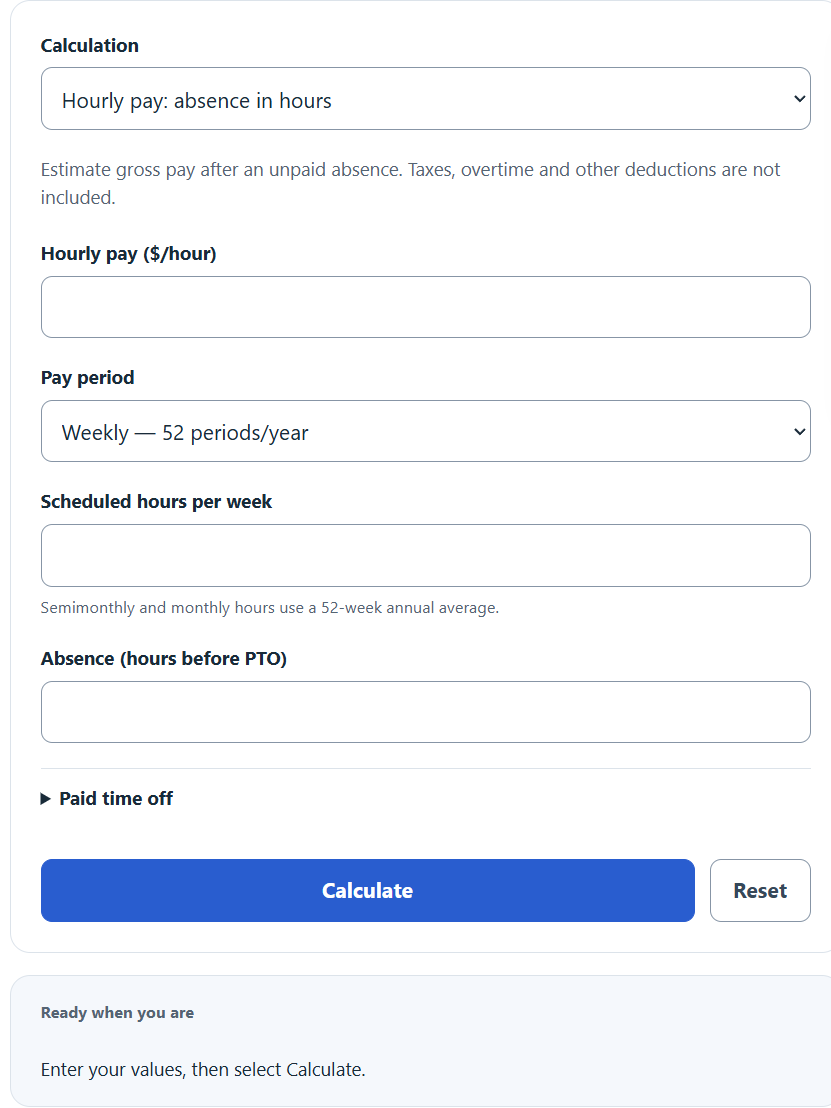
Choose an unpaid-absence deduction, salary proration, or employer-cost estimate. Absence deduction = unpaid hours × hourly rate; gross pay after deduction = scheduled gross pay − deduction. Employer cost adds direct lost-pay cost, optional coverage and optional indirect costs. All amounts use $ and are before taxes. This is an estimate, not a legal payroll determination; salary-basis deduction rules may restrict deductions.
What is an Absentee Payroll?
An absentee payroll is a payroll system that accounts for the days an employee is absent from work. It calculates the total pay based on the number of days worked and the daily rate. The appropriate method depends on the pay agreement and applicable law. The calculator estimates amounts and does not establish whether a deduction is lawful.
How to Calculate Absentee Payroll?
The following steps outline how to calculate the Absentee Payroll.
- First, choose the calculation needed.
- Next, enter the requested pay amount and schedule, or the dates for proration.
- Enter any applicable optional PTO, holidays, coverage or indirect cost assumptions; blank optional amounts mean zero.
- Select Calculate. Review the gross amount and breakdown. Calendar proration defaults to the actual 365- or 366-day year; a fixed 365-day basis is also available. Workday proration uses a disclosed 52-week annual schedule.
- After inserting the values and calculating the result, check your answer with the calculator above.
Example Problem :
For a simple daily-pay illustration, 10 paid days at $100/day gives $1,000 before tax:
Total Pay (P) = $1000
Days Worked (D) = 10 days
Daily Rate (R) = $100/day