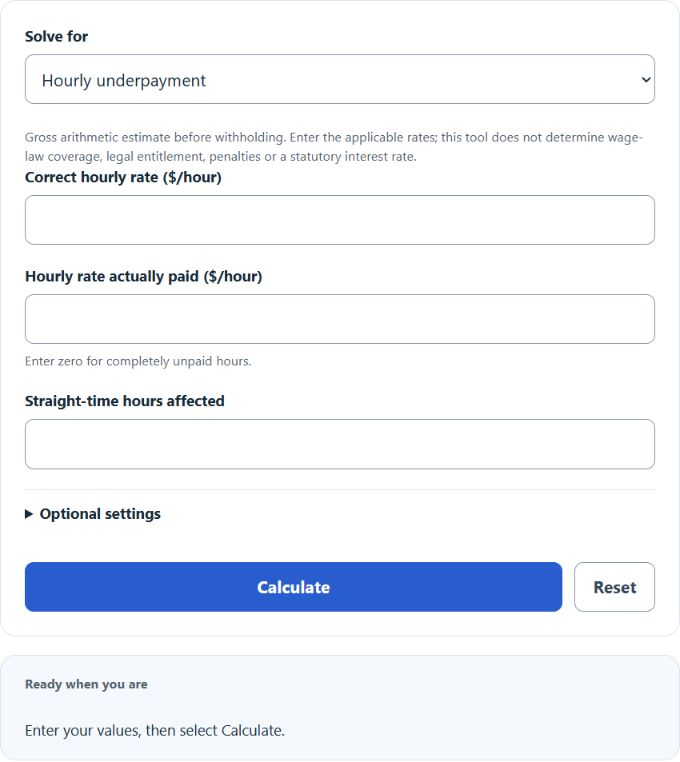
Use this back pay calculator to estimate unpaid wages from hourly or salary underpayment, add simple interest, and model a gross total under the rates and assumptions you enter.
Back Pay Formula
Back pay is the difference between what you should have been paid for work already performed and what you actually received. For hourly underpayment, the calculator multiplies the rate gap by the hours affected:
BP = (Rc - Rp) * H
For salary underpayment, it applies the annual salary gap to the portion of the year that was affected:
BP = (Sc - Sp) * T
Variables:
- BP is the back pay owed, in gross dollars before tax withholding
- Rc is the correct hourly rate you should have received
- Rp is the hourly rate you were actually paid (use 0 for hours that were never paid at all)
- H is the number of hours affected
- Sc is the correct annual salary, and Sp is the annual salary actually paid
- T is the fraction of a year affected: months divided by 12, weeks divided by 52, or pay periods divided by the number of pay periods per year
Choose what you want to find at the top of the calculator. “Hourly underpayment” covers being paid the wrong hourly rate, “Salary underpayment” covers a salaried shortfall over a set period, and “Unpaid hours” covers time you worked but were never paid for, with separate overtime hours paid at the applicable rate times a multiplier (1.5 for time and a half). Under the FLSA, the regular rate may include remuneration beyond base hourly wages; coverage and overtime eligibility must be assessed separately. The optional interest section adds simple interest as back pay times the annual rate divided by 100 times the months elapsed divided by 12.
Back pay is often confused with retro pay, but they answer different questions. Back pay is wages owed for past work that was underpaid or never paid, such as a minimum wage violation, unpaid overtime, or a payroll error. Retro pay (retroactive pay) is the difference owed when a raise or a new contract rate takes effect late, so earlier paychecks went out at the old rate. The arithmetic is similar, but back pay usually signals a compliance problem while retro pay is a routine payroll correction.
Sample Back Pay Amounts by Hourly Gap
This table shows total back pay for common combinations of hourly underpayment and hours affected, using the gap multiplied by the hours. As a benchmark, 2,000 hours is roughly one year of full-time work.
| Hourly gap | 100 hours | 250 hours | 500 hours | 1,000 hours | 2,000 hours |
|---|---|---|---|---|---|
| $1.00 | $100 | $250 | $500 | $1,000 | $2,000 |
| $2.00 | $200 | $500 | $1,000 | $2,000 | $4,000 |
| $3.00 | $300 | $750 | $1,500 | $3,000 | $6,000 |
| $4.00 | $400 | $1,000 | $2,000 | $4,000 | $8,000 |
| $5.00 | $500 | $1,250 | $2,500 | $5,000 | $10,000 |
Example Problems
Example 1: Hourly underpayment.
You should have been paid $18.00 per hour but were paid $15.00 per hour for 480 hours. Subtract the rates, then multiply by the hours affected:
BP = (18 – 15) * 480 = 3 * 480 = $1,440.00 in gross back pay.
Example 2: Salary underpayment.
Your correct salary is $60,000 per year, but you were paid at $55,000 per year for 4 months. The annual gap is $5,000, and the affected fraction of the year is 4 divided by 12:
BP = (60,000 – 55,000) * 4 / 12 = 5,000 * 0.3333 = $1,666.67 in gross back pay.
Frequently Asked Questions
What is the difference between back pay and retro pay?
Back pay is money owed for past work that was underpaid or never paid at all, such as an hourly rate below what was agreed, missed overtime, or hours that never made it onto a paycheck. Retro pay is the catch-up amount owed when a raise, promotion, or new contract rate is applied late, so earlier checks were issued at the old rate. Both are calculated as a pay gap multiplied by the time affected, but back pay typically involves a wage violation while retro pay is a routine correction.
Can you get interest or damages on back pay?
Available remedies depend on the claim and jurisdiction. In FLSA minimum-wage or overtime litigation, equal liquidated damages may be available. A court may reduce or decline them if the employer proves good faith and reasonable grounds. Current U.S. Department of Labor guidance excludes liquidated damages from its administrative settlements before litigation. This calculator models only the simple interest you enter; it does not establish an entitlement to interest or calculate statutory damages.
How far back can you claim unpaid wages?
Under the FLSA, you can generally recover unpaid wages going back 2 years from the date you file, or 3 years if the violation was willful. State deadlines vary and can be longer, and each underpaid paycheck typically starts its own clock, so older pay periods fall out of reach as time passes. If you believe you are owed back pay, act promptly and consider contacting your state labor agency, the U.S. Department of Labor, or an employment attorney.