Compare bike and run distances using an adjustable planning ratio, calculate same-duration run pace, or match modeled gross calories using activity MET values. Terrain and individual fitness are not modeled.
Bike-to-Run Conversion Methods
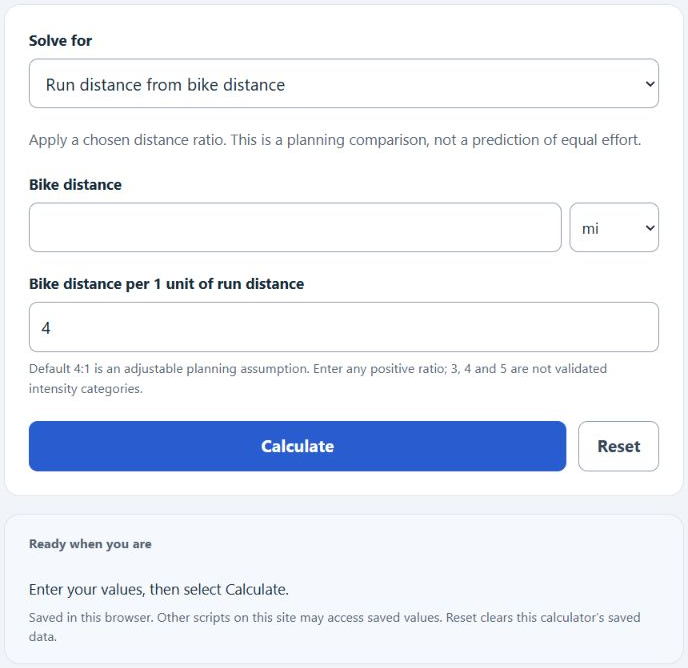
This calculator offers three different planning models. Distance mode applies a selectable bike-to-run distance ratio. Same-duration mode combines bike speed, ride duration, and that ratio to estimate run distance and pace. Calorie mode uses duration and activity MET values to estimate run duration with similar modeled gross energy expenditure. Optional body weight adds calorie amounts; it cancels from the duration ratio.
| Method | Required inputs | Primary output |
|---|---|---|
| Distance ratio | Known distance, direction, unit, and ratio | Equivalent run or bike distance |
| Same duration | Bike speed, ride time, speed unit, and ratio | Run distance and equal-duration pace |
| Calorie matched | Bike time, bike MET, and run MET; optional weight for calorie amounts | Run duration for similar modeled calories |
Distance and Same-Duration Modes
The ratio expresses bike distance per unit of run distance. The default 4:1 and suggested 3:1 and 5:1 ratios are adjustable planning assumptions, not validated easy, moderate or hard intensity categories. A 4:1 ratio converts a 20-mile ride to a 5-mile run, or a 5-mile run to a 20-mile ride. In same-duration mode, the calculator first finds bike distance from speed and time, then converts distance and reports the pace needed to cover the run estimate in the same amount of time.
Calorie-Matched Mode
Modeled calories use the standard MET relationship: calories = MET × 3.5 × body weight in kilograms / 200 × minutes. The run-duration result equals bike MET multiplied by ride minutes and divided by run MET. These are population-level activity estimates, so device data and personal measurements may differ. Gross calories include resting energy. The default bike value is 8 MET for cycling at 12–13.9 mph; the default run value is 10 MET for track team practice. Edit either value to match the activity. Body weight is optional because it cancels when matching durations.
How to Interpret the Result
Use the output as a repeatable planning comparison rather than a promise of equivalent fatigue or race performance. Heat, hills, surface, wind, drafting, accumulated bike fatigue, fueling, and running economy can materially change the real bike-to-run relationship.
Sources
2024 Adult Compendium: bicycling; running; MET energy conversions.