Estimate a bowling-ball starting weight from body weight and a configurable guideline percentage, capped at a selected maximum no higher than 16 pounds.
Bowling Ball Weight Formula or Method
The common body-weight percentage is only a first fitting estimate. The calculator converts body weight to pounds, applies the selected percentage, and caps the result at the selected maximum.
How the Calculation Works
The calculator applies the displayed relationship or scoring method to the visible required inputs and reports one defined result with supporting detail.
How to Use This Calculator
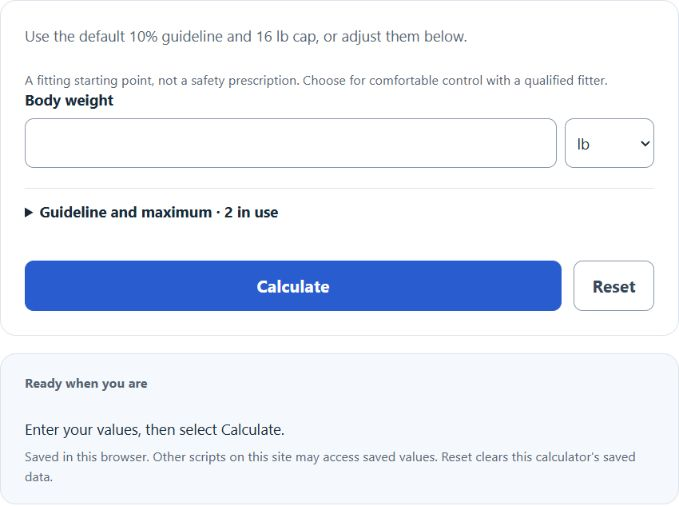
- Enter your body weight and choose pounds or kilograms.
- Use the default guideline and maximum, or expand Guideline and maximum to adjust them.
- Select Calculate and review the primary answer, supporting values, and steps.
- Use Reset before starting a different game or scenario.
Worked Example
At 150 lb with a 10% starting guideline and a 16 lb maximum, the uncapped and displayed estimate is 15.00 lb.
Input and Result Guide
| Item | How to use it |
|---|---|
| Guideline percentage | Ten percent is a common starting point, not an equipment rule. |
| Maximum | USBC equipment specifications currently cap ball weight at 16.00 lb and set no minimum. |
| Fit | Hole span, grip, surface, strength, balance, and pain-free control matter more than a formula alone. |
| Practical choice | Test nearby available weights with a qualified pro-shop fitter. |
Interpreting the Result
Treat the percentage result as a starting point for a fitting discussion. It is not rounded to a commercially available ball weight.
Assumptions and Limitations
This is not a youth-age rule, medical recommendation, or guarantee of safe fit. Stop if a ball causes pain or loss of control and seek qualified fitting or clinical guidance when appropriate.
Common Questions
Can I change the guideline or maximum?
Yes. Expand Guideline and maximum. Blank settings use 10% and 16 lb; entered settings still apply when the section is collapsed.
Will my last successful calculation be restored?
Yes. The calculator saves the last successful input snapshot in this browser and recomputes it when restored. Unsaved edits do not replace that snapshot. Reset clears this calculator’s saved state.
Sources
United States Bowling Congress, Equipment Specifications Manual, updated March 2026; common 10% body-weight fitting guideline treated only as a rule of thumb.