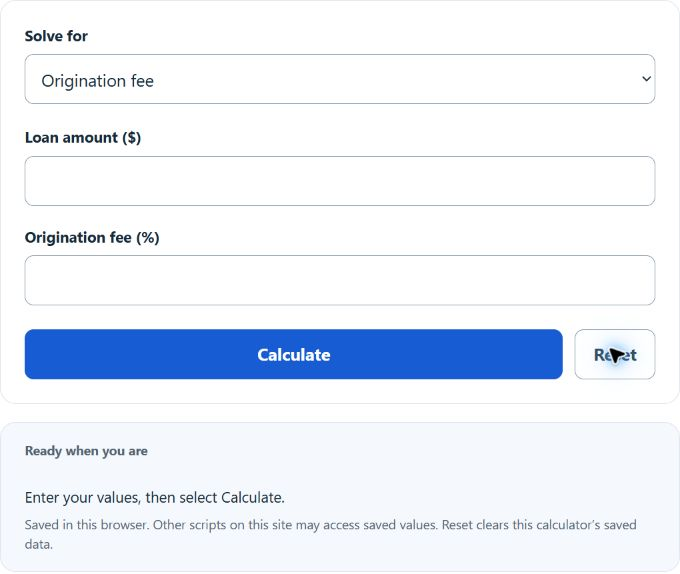
Calculate loan origination fee, fee percentage, or loan amount from two known values with this simple loan fee calculator for borrowers.
Origination Fee Formula
The following equation is used to calculate the Origination Fee.
- Where OF is the origination fee ($)
- LA is the loan amount ($)
- R is the origination rate (%)
To calculate the origination fee, multiply the loan amount by the origination percentage divided by 100.
What is an Origination Fee?
Definition:
An origination fee is the cost required to initiate a financial agreement or loan, typically expressed as a percentage or flat fee of the total amount. It helps cover the lender’s administrative costs and is usually paid upfront by the borrower.
How to Calculate Origination Fee?
Example Problem:
The following example outlines the steps and information needed to calculate the Origination Fee.
First, determine the loan amount. In this example, the loan was for $100,000.
Next, determine the origination rate. The lender charges 1% as an origination fee.
Finally, calculate the origination fee using the formula above:
OF = LA × (R / 100)
OF = $100,000 × 0.01
OF = $1,000
FAQ
Are origination fees negotiable?
Yes, in some cases borrowers can negotiate origination fees with lenders, or opt for lenders who charge lower fees. However, securing a lower fee might also affect the interest rate or other loan terms.
What types of loans typically include an origination fee?
Common examples include mortgages, auto loans, personal loans, and some business loans. The fee varies by lender and loan type.
Can I finance my origination fee?
It depends on the lender’s policies and the type of loan. Some lenders may allow you to roll the origination fee into the loan, though this will effectively increase the total loan amount and the amount of interest paid over time.