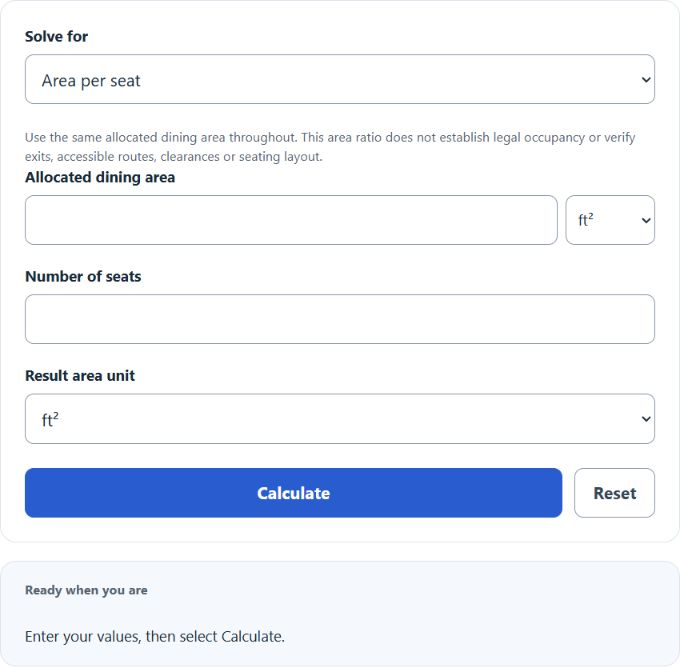
Calculate an allocated dining area, an area-based seat estimate, or area per seat in square feet, meters, yards, or inches. This area ratio does not establish legal occupancy or verify a compliant seating layout.
Related Calculators
- Fire Occupancy Calculator
- Cooling Capacity Calculator
- Hot Water Demand Calculator
- kW Per Square Foot Calculator
- All Construction Calculators
Restaurant Space Formula
The following equation is used to calculate the Restaurant Space.
- Where RS is the allocated dining area per seat (ft²/seat)
- TA is the allocated dining area (ft²)
- #S is the seating capacity
To calculate the restaurant space, divide the total area by the seating capacity.
What is a Restaurant Space?
Definition:
Restaurant space per seat is the chosen dining area divided by the number of seats. The ratio alone does not ensure comfortable spacing, adequate pathways, accessible routes or compliance with occupancy rules.
How to Calculate Restaurant Space?
Example Problem:
The following example outlines the steps and information needed to calculate the Restaurant Space.
First, determine the total available area. In this example, the restaurant floor plan allows for 2,000 ft² to be dedicated to dining.
Next, determine the seating capacity. This establishment plans to accommodate 80 guests at one time.
Finally, calculate the restaurant space per seat using the formula above:
RS = TA / #S
RS = 2000 ft² / 80 seats
RS = 25 ft²/seat
FAQ
How important is restaurant space planning?
Proper space planning in a restaurant is crucial for ensuring guest comfort and creating efficient traffic patterns for servers, cooks, and other staff. An optimal layout can help maximize the number of guests served while maintaining a pleasant dining experience.
Does the style of restaurant affect how much space is needed per seat?
Yes. Fine dining establishments often require more space per seat to accommodate larger tables, more elaborate decor, and to provide a luxurious ambience. Fast-casual restaurants can typically operate with tighter seating arrangements due to quicker table turnover and simpler table settings.
What other factors can influence restaurant space requirements?
Apart from the seating area, factors such as waiting areas, bar sections, kitchen size, restroom facilities, and any storage or office space can also significantly influence total space requirements. Local building codes, accessibility regulations, and safety guidelines also play a critical role in determining layout and spacing.