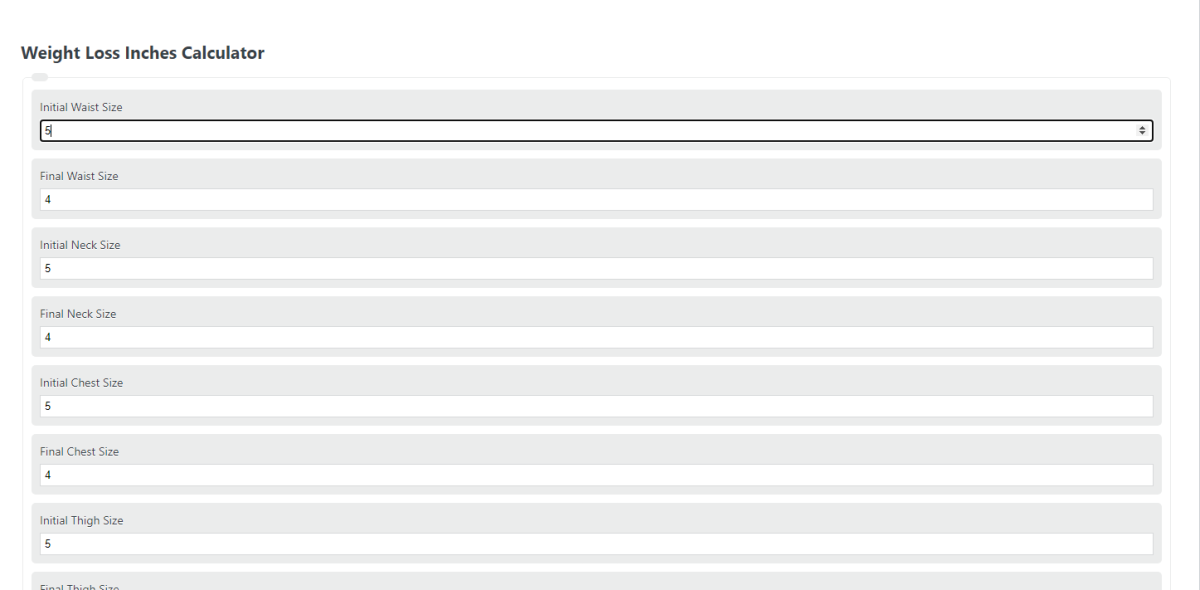
Calculate total inches or centimeters lost from before-and-after waist, chest, hip, neck, arm, and thigh measurements, or solve one measurement.
- Weight Loss Percentage Calculator
- Weight Loss Time Calculator
- Weight Loss Calculator
- Weight Loss Pant Size Calculator
- Ideal Weight Calculator
Weight Loss Inches Formula
The weight loss inches calculation adds together the reduction in circumference across each body area you track. For each measurement, subtract the final size from the starting size. Then sum all of those individual changes.
In this calculator, the measured areas are waist, neck, chest, and thigh, so the expanded formula is:
- WLI = total weight loss inches
- Wi, Ni, Ci, Ti = initial waist, neck, chest, and thigh measurements
- Wf, Nf, Cf, Tf = final waist, neck, chest, and thigh measurements
If all inputs are entered in the same unit, the result will be in that same unit. That means you can use inches, centimeters, or millimeters as long as you stay consistent.
How to Calculate Weight Loss Inches
- Measure each body area before starting your weight loss phase.
- Measure the same body areas again later using the same tape position and body posture.
- Subtract each final measurement from its corresponding initial measurement.
- Add all individual losses together to get the total inches lost.
Example
Suppose your measurements changed as follows:
- Waist: 36 in to 32 in
- Neck: 12 in to 11 in
- Chest: 45 in to 43 in
- Thigh: 25 in to 23 in
Your total measurement reduction is 9 inches.
Where to Measure
| Body Area | Common Measurement Location | Helpful Tip |
|---|---|---|
| Waist | Around the narrowest part of the torso or at a consistent point near the navel | Do not suck in your stomach; measure after a normal exhale |
| Neck | Around the middle of the neck | Keep the tape level and snug, not tight |
| Chest | Around the fullest part of the chest | Keep arms relaxed and tape parallel to the floor |
| Thigh | Around the widest part of the upper thigh | Measure the same leg each time at the same height |
Why Tracking Inches Matters
Body circumference can reveal progress that scale weight alone may miss. A person can see their waist, chest, or thigh measurements decrease even when body weight changes slowly. This makes inches lost useful for tracking changes in body shape, clothing fit, and overall size reduction.
- Positive result: You reduced your total measured circumference.
- Zero result: No net change across the areas tracked.
- Negative result: One or more measurements increased overall.
Total inches lost should be viewed as a measurement-based progress metric, not a direct conversion to pounds lost. Two people can lose the same amount of weight but see different circumference changes based on body composition and where fat loss occurs.
Tips for More Accurate Results
- Measure at the same time of day whenever possible.
- Use the same tape measure each time.
- Keep the tape snug against the skin without compressing tissue.
- Stand naturally with consistent posture.
- Track the same anatomical points each time.
- Record values immediately to avoid mix-ups.
Common Mistakes
- Mixing units between measurements
- Measuring different locations each time
- Pulling the tape tighter on one date than another
- Comparing morning measurements to evening measurements
- Adding only one body part and assuming it represents total body change
Weight Loss Inches vs. Weight Loss Percentage
Weight loss inches measures change in body circumference. Weight loss percentage measures how much body weight changed relative to starting weight. Both can be useful, but they answer different questions:
- Use inches lost to track size and shape changes.
- Use weight loss percentage to track total body weight change.
Frequently Asked Questions
Can I use only one body measurement?
Yes. If you only want to track waist loss, the formula becomes a simple difference between starting waist size and final waist size. Tracking multiple areas, however, gives a more complete picture.
Can the result be negative?
Yes. If your final measurement is larger than your initial measurement in one or more areas, that portion of the calculation becomes negative and lowers the total.
How often should I measure?
Weekly or every two weeks is usually frequent enough to show meaningful change without being distorted by normal day-to-day fluctuations.
Is this calculator only for fat loss?
No. It measures circumference change, regardless of whether that change comes from fat loss, muscle gain, water retention, or other body-composition changes.