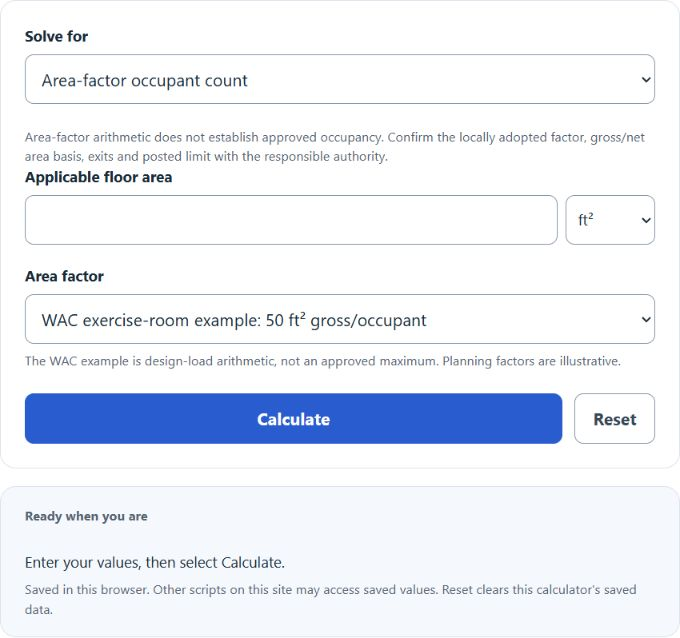
Gym Occupancy Calculator performs area-factor design-load or planning arithmetic, required-area calculations, and current occupancy comparisons. It does not establish approved occupancy.
Related Calculators
- Gym Capacity Calculator
- Max Occupancy Calculator
- Occupancy Percentage Calculator
- People Per Square Foot Calculator
- Area Per Person Calculator
- All Sports and Fitness Calculators
Gym Occupancy Formula
The following equation is used to calculate the Gym Occupancy.
Formula source: WAC 51-54A-1004.5 – Occupant Load (Areas without fixed seating), Washington Administrative Code
- Q is the unrounded area/factor quotient; rounded counts are mathematical estimates (people)
- GS is the applicable floor area (sq ft), gross for the cited exercise-room example
- SO is the space needed per occupant (sq ft/person)
Divide the applicable area by the selected area-per-person factor. Round upward for design-load arithmetic or downward for a whole-person planning count. Neither calculation is an approved maximum occupancy.
What is a Gym Occupancy?
Definition:
Actual gym occupancy is the headcount in the space. Approved occupancy limits depend on the applicable code, space use, exits, layout and local authority; an area/factor quotient alone does not establish compliance.
How to Calculate Gym Occupancy?
Example Problem:
The following example outlines the steps and information needed to calculate the Gym Occupancy.
First, determine the gym size. In this example, the gym is 2,000 square feet.
Next, choose the applicable factor and area basis. The cited Washington exercise-room example uses 50 square feet gross per occupant; verify local applicability. Illustrative 40/60 square-foot planning factors are not universal requirements.
Finally, calculate the gym occupancy using the formula above:
Q = GS / SO; rounded-up design-load arithmetic = ceil(Q)
Q = 2000 / 50 = 40
The example design-load arithmetic is 40 people. This does not establish a posted maximum capacity.
FAQ
What factors can affect gym occupancy?
Gym occupancy can be influenced by local safety regulations, the layout of the gym, the type of equipment used, and the desired comfort level for workouts. Higher-intensity activities might also require more space per person.
How can I optimize my gym occupancy?
Optimizing gym occupancy can involve rearranging equipment to create more space, scheduling popular classes at different times to reduce peak crowding, and regularly communicating occupancy limits to members. Monitoring attendance data can help determine the best ways to manage traffic flow.
Are there official regulations I must follow for gym occupancy?
Yes, occupancy limits can be set by local fire codes, health departments, or other regulatory agencies. It’s recommended to consult local guidelines to ensure your gym is compliant with current regulations.