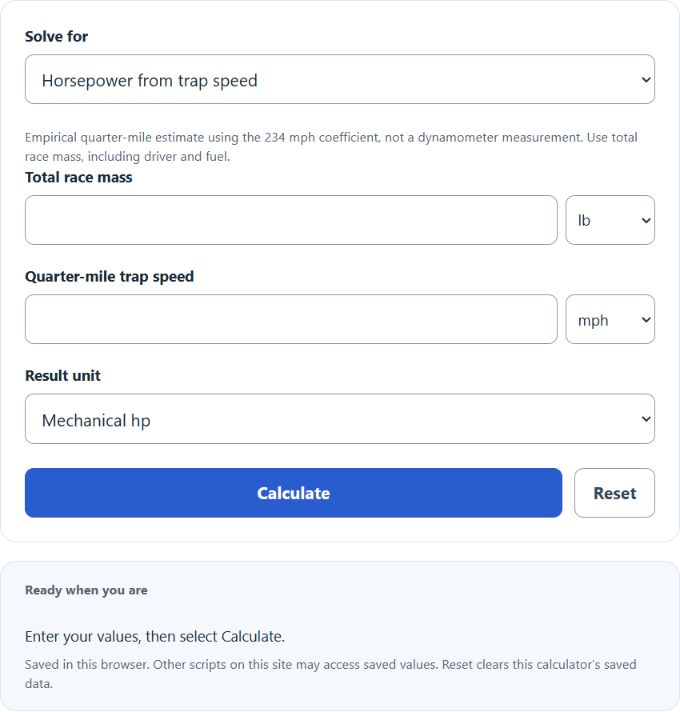
Calculate horsepower, weight, or trap speed from two known values using drag strip speed formulas in hp, lbs, mph, kW, kg, or kph.
Horsepower Trap Speed Formula
The horsepower trap speed calculator uses the common quarter-mile trap speed estimate. It works with horsepower, vehicle weight, and trap speed. Select the value to solve for, then enter the two known values.
- HP = horsepower
- W = vehicle weight in pounds
- V = trap speed in miles per hour
- 234 = quarter-mile trap speed constant used in this estimate
- cbrt = cube root
Select horsepower to estimate it from total race mass and trap speed; select race mass to reverse the same model; or select trap speed to estimate it from horsepower and race mass.
The calculator converts kW to mechanical horsepower, kg to pounds, and km/h to mph before applying the formula, then converts the result to the selected result unit.
Trap Speed Estimates by Power-to-Weight Ratio
These values show approximate quarter-mile trap speeds from the formula. Use total race weight, including the driver and fuel, for the closest comparison.
| Horsepower / Weight | Example | Estimated Trap Speed |
|---|---|---|
| 0.08 hp/lb | 280 hp at 3,500 lb | 100.8 mph |
| 0.10 hp/lb | 350 hp at 3,500 lb | 108.6 mph |
| 0.12 hp/lb | 420 hp at 3,500 lb | 115.4 mph |
| 0.15 hp/lb | 525 hp at 3,500 lb | 124.3 mph |
| 0.20 hp/lb | 700 hp at 3,500 lb | 136.8 mph |
Horsepower Trap Speed Examples
Example 1: Calculate trap speed
You have 450 hp and a race weight of 3,500 lb.
The estimated trap speed is 118.1 mph.
Example 2: Calculate horsepower
You know the car weighs 3,600 lb and traps 120 mph.
The estimated horsepower is 485.5 hp.
Horsepower Trap Speed FAQ
Should you use curb weight or race weight?
Use race weight. That means the vehicle, driver, fuel, and anything else in the car during the pass. Trap speed is affected by the total weight being accelerated, so curb weight alone can make the horsepower estimate too low.
Is this wheel horsepower or engine horsepower?
This empirical performance estimate does not distinguish crankshaft and wheel horsepower. The fixed 234 coefficient, aerodynamic drag, drivetrain loss and track conditions affect the result; it is not a dynamometer measurement.
Why does trap speed give a better horsepower estimate than elapsed time?
Trap speed is less affected by launch, traction, gearing, and driver reaction than elapsed time. A poor launch can hurt elapsed time badly while still producing a strong trap speed. That is why trap speed is commonly used for quick horsepower estimates.