Calculate estimated mean arterial pressure and pulse pressure from systolic and diastolic blood pressure, or solve for a missing BP value in mmHg.
Note: This calculator provides educational estimates only and is not medical advice, diagnosis, or treatment guidance. Clinical “scenario” references (and CVP-based calculations) are intended for clinician-directed, monitored settings and may not apply to individual situations. If you have symptoms such as chest pain, shortness of breath, fainting, confusion, severe headache, or if readings are very high/low or concerning, seek urgent medical care. For clinical guideline targets, consult professional society guidance (e.g., critical care guidelines) and your clinician.
- All Health and Medical Calculators
- Aerobic Capacity Calculator
- Body Fat Calculator
- BMR Calculator
- HCT Calculator
- TPR Calculator
- Average Blood Pressure Calculator
MAP Formula
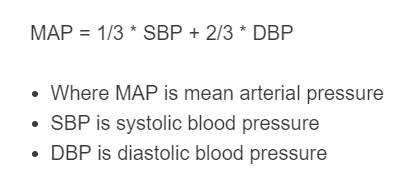
The following formula is commonly used to calculate mean arterial pressure (MAP) as an approximation (especially at normal resting heart rates).
- Where MAP is mean arterial pressure
- SBP is systolic blood pressure
- DBP is diastolic blood pressure
To estimate MAP, add the systolic pressure to two times the diastolic pressure, then divide by 3.
MAP Definition
MAP stands for mean arterial pressure (also called mean arterial blood pressure). It is the average pressure in the arteries during a single cardiac cycle. MAP is based on systolic blood pressure and diastolic blood pressure. The relationship can be seen in the formula below.
In clinical practice, blood pressure is commonly reported as systolic/diastolic (for example, 120/80 mmHg). MAP is often displayed on monitors and referenced as an indicator used alongside other findings, especially in critical care. Heart rate is communicated separately in beats per minute (bpm).
How to calculate MAP
The following example is a step-by-step guide on how to calculate MAP.
- First, the formula above needs to be analyzed to determine what missing variables need to be measured or determined. By looking at the equation you can see that both the SBP and DBP are required.
- The next step is to measure the SBP. This is typically done with a medical device. For this example, we will assume the SBP to be 120 mmHg.
- Next, the DBP must be determined. For this example, we will assume the DBP to be 80 mmHg.
- Finally, enter all of the information gathered above into the formula. So, MAP = (120 + 2 × 80) / 3 = 280 / 3 = 93.33 mmHg.
- Analyze the results to see if this answer makes logical sense (for example, whether the MAP is within a typical range for an adult).
FAQ
MAP is the average pressure in the arteries during a single cardiac cycle.
Calculator Change Log:
- 6/11/25 - Added functionality for batch processing. Added formula selector for optional tachycardia formula.