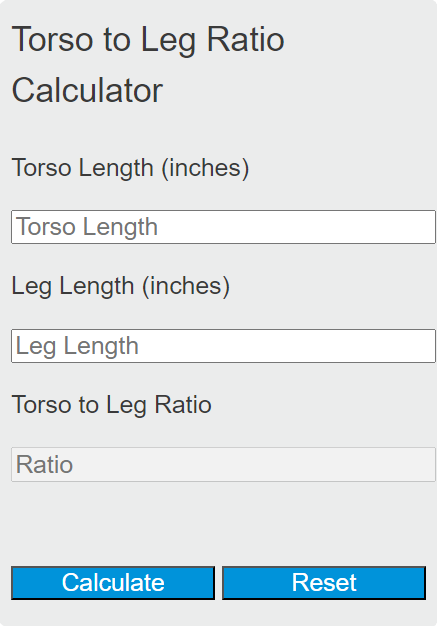
Calculate torso-to-leg ratio, torso length, leg length, sitting-height ratio, and body proportions using inches, feet, centimeters, or meters.
Related Calculators
- Height to Torso Length Calculator
- Height to Leg Length Calculator
- Leg to Body Ratio Calculator
- Torso Length Calculator
- Short or Long Torso Calculator
- Height to Head Circumference Calculator
- All Health and Medical Calculators
Torso to Leg Ratio Formula
The torso to leg ratio compares upper-body length to lower-body length using the same unit of measurement for both values. It is a simple proportion that helps describe body balance for sizing, fit, posture analysis, and general body-proportion comparisons.
Where:
- R = torso to leg ratio
- T = torso length
- L = leg length
If your calculator is solving for a missing value, the same relationship can be rearranged as follows:
How to Measure Correctly
- Torso length: Measure from the top of the hip area to the top of the head while standing upright.
- Leg length: Measure from the top of the hip area to the bottom of the foot.
- Use the same unit for both measurements, such as inches, centimeters, or meters.
- Measure without shoes for better consistency.
- Keep posture natural and straight to reduce error.
- If you repeat the calculation later, use the same landmarks and method each time.
How to Interpret the Result
The ratio is descriptive only. It tells you how torso length compares to leg length, but it does not diagnose health or determine athletic ability by itself.
| Ratio Range | Interpretation |
|---|---|
R > 1 |
The torso is longer than the legs. |
R = 1 |
The torso and legs are equal in length. |
R < 1 |
The legs are longer than the torso. |
Example
If torso length is 30 inches and leg length is 40 inches, the ratio is:
A result of 0.75 means the leg measurement is greater than the torso measurement.
Why This Ratio Is Useful
- Clothing fit: Helpful when comparing body proportions for jackets, tops, pants, and one-piece garments.
- Ergonomics: Useful when thinking about desk setup, seat height, and general body positioning.
- Fitness and mobility tracking: Can be used as a reference point when comparing changes in posture or measurement consistency over time.
- Anthropometric comparison: Provides a quick way to describe relative limb and trunk proportions.
Common Input Mistakes
- Mixing units, such as entering torso length in inches and leg length in centimeters.
- Using different anatomical landmarks for each measurement session.
- Measuring inseam instead of full leg length when the calculator expects hip-to-foot length.
- Rounding one value heavily but not the other.
- Taking measurements while wearing thick shoes or bulky clothing.
Quick Tips for Better Accuracy
- Measure twice and use the average if the values differ slightly.
- Ask someone to help if you want a cleaner measurement line.
- Stand flat against a wall if you need a more stable posture.
- Record the unit with the number so you do not accidentally switch systems.
Frequently Asked Questions
Is the torso to leg ratio a percentage?
The result is usually expressed as a decimal or ratio, not a percentage.
Can I use centimeters instead of inches?
Yes. Any unit works as long as both measurements use the same unit.
Why does my result change when I remeasure?
Small changes usually come from posture, foot position, measurement landmarks, or rounding differences.
Does a higher ratio mean better proportions?
No. A higher or lower value simply describes the relationship between torso length and leg length.