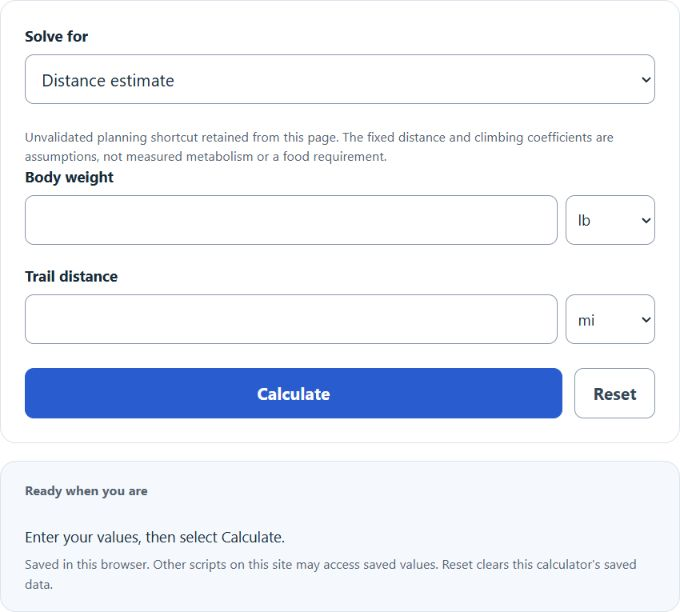
Estimate trail-hiking energy from body weight and distance, with an optional elevation-gain component and fully explicit measurement units.
Trail Hiking Calorie Estimate
Distance estimate uses the existing distance-based shortcut. Distance plus elevation gain adds an uphill component. Both are unvalidated planning approximations, not measurements of an individual hiker’s metabolism.
- W = body weight in pounds
- D = trail distance in miles
- G = total elevation gain in feet
Worked Example
A 180-pound hiker traveling 4 miles with 500 feet of gain has a basic estimate of 482 kilocalories. The elevation component adds about 146 kilocalories, for an advanced estimate of 628 kilocalories.
| Body weight | Basic estimate per mile | Added estimate per 1,000 ft gain |
|---|---|---|
| 120 lb | 80 kcal | 194 kcal |
| 150 lb | 101 kcal | 243 kcal |
| 180 lb | 121 kcal | 292 kcal |
| 200 lb | 134 kcal | 324 kcal |
What the Estimate Does Not Model
Pace, grade distribution, downhill travel, technical footing, pack load, weather, age, body composition, and individual efficiency can all change actual energy use. A wearable or laboratory method may also use a different model and should not be expected to match this distance-based shortcut.
Sources
- 2024 Adult Compendium of Physical Activities — walking and hiking MET categories. These categories do not establish the fixed distance and elevation coefficients used in this shortcut.
- National Park Service — Hike Smart: hiking safety guidance, not validation of this calorie formula.