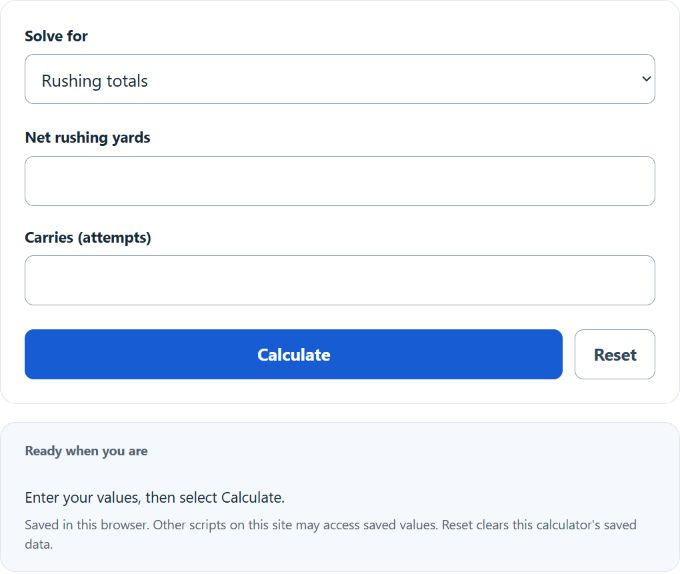
Calculate yards per carry from a rushing line, totals, or game log, and see rushing efficiency ratings plus total yards and carries.
Related Calculators
- Football Calorie Calculator
- QB Rating Calculator (Passer Rating)
- Adjusted Yards Per Attempt Calculator
- Football Win Probability Calculator
- Average Points Per Game Calculator
- All Sports and Fitness Calculators
Yards Per Carry Formula
- YPC — yards per carry (rushing average)
- Rushing Yards — net yards gained on rush attempts (gains minus losses)
- Carries — total rush attempts; NFL sacks are not rushing attempts; quarterback kneel-downs are included
Receiving yards, return yards, and yardage from penalties are excluded. For multi-game totals, sum yards and carries first, then divide. Averaging the per-game YPC values gives a different, weighted-incorrect number.
Interpreting Yards Per Carry
YPC is a descriptive average. Compare like-for-like workloads and league definitions; this calculator does not assign universal player ratings or assume a fixed league average.
Examples and FAQ
Example 1. A back goes 18 carries for 84 yards. YPC = 84 / 18 = 4.67. The result describes the entered rushing line.
Example 2. Season totals of 1,215 yards on 272 carries. YPC = 1,215 / 272 = 4.47. The result describes the entered season totals.
Do sacks count against a quarterback’s YPC? In the NFL, no. Sack yardage is charged to passing, not rushing. In college, sacks count as rushing losses, which is why college QB rushing totals often look lower than they should.
Why does my multi-game average not match the per-game numbers? YPC is weighted by carries. A 10-carry, 80-yard game (8.0) and a 20-carry, 60-yard game (3.0) average to 4.67 overall, not 5.5. Always combine totals before dividing.
What about kneel-downs? Official stats include them, which drags QB YPC down. For an adjusted average excluding kneels, subtract both their net yardage and attempts, and label the result as adjusted.