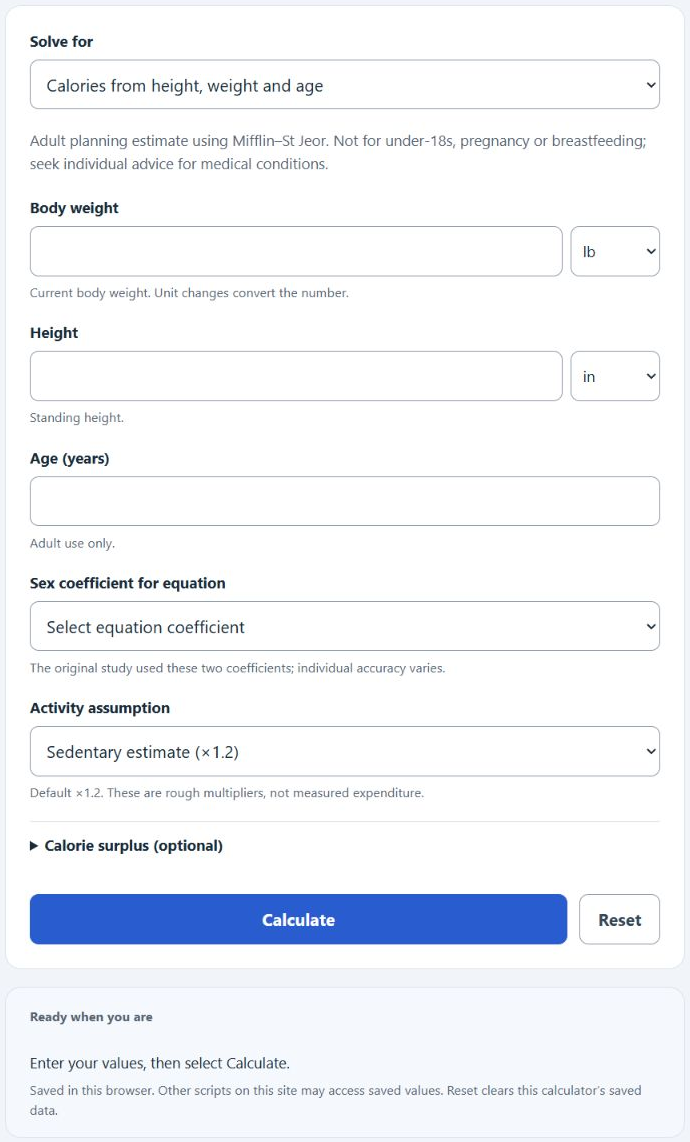
Estimate maintenance calories and a gradual calorie surplus for athletic mass gain. Use the dedicated Athlete Cutting Calculator for a deficit.
Watch the full explainer with transcript and worked examples.
What is Bulking?
Bulking is a term used in the fitness community to describe the process of intentional weight gain, often with the goal of gaining as much muscle as possible. Bulking typically involves eating in a calorie surplus (more energy than your body needs). A surplus can support weight gain, but building muscle also requires consistent resistance training and adequate protein, and some weight gain may be body fat and water.
This calculator adds your chosen calorie surplus to an estimated maintenance intake. It does not convert a surplus into a promised weekly weight gain: changes in fat, muscle, glycogen, water and energy expenditure vary. The main mode uses Mifflin–St Jeor; the body-fat mode uses Katch–McArdle. Activity multipliers are approximate. A blank surplus means maintenance. Macro mode separately converts a chosen calorie amount into protein, fat and carbohydrate grams.
Bulking versus maintenance
This calculator covers maintenance and gradual surplus planning. Use the Athlete Cutting Calculator for a deficit.
Bulking Tips
The following are general considerations for adult surplus planning. They do not replace individual nutrition advice.
- Don’t eat as much as possible. You will gain too much excess weight as fat, and it will be hard to lose when you’re done bulking. Only eat enough to gain a steady amount.
- Choose a varied diet that supports your nutrient needs. Food labels alone do not predict how much weight gain will be muscle or fat.
- Track your progress as you go along and adjust your calories as needed. Don’t stick to something that’s not working, adjust constantly.
- Reassess your plan using trends in body weight, performance and how you feel; adjust with professional guidance when appropriate.
For adults only; not intended for pregnancy, breastfeeding or treatment of a medical condition. The calculator does not apply a universal minimum calorie intake or label its result as safe. Sources: Mifflin–St Jeor equation study, research describing Katch–McArdle, and NIDDK adult planning guidance.