Estimate your max bench from a real set or reverse-solve a target-rep load using Epley, Brzycki, or a three-formula consensus with plate rounding.
Max Bench Press Calculator
The bench press is one of the “big 3” lifts in powerlifting (along with the squat and the deadlift). These are the three lifts performed at most powerlifting competitions to measure an individual’s overall strength.
Bench press is also a very popular gym exercise, and many strength sports run bench press–only competitions where it’s the only lift performed. Many people learn it early when starting out weightlifting.
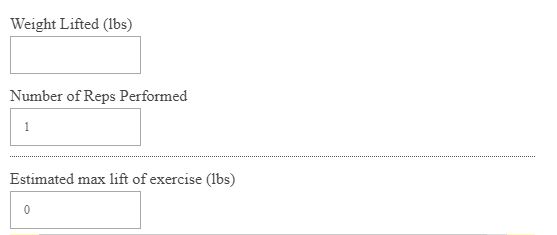
So how is your max bench press calculated? The 1RM calculator above uses the Epley estimate:
Estimated 1RM ≈ Weight × (1 + Reps / 30)
For instance, if you can lift 150 lbs for 3 reps, your estimated maximum lift is going to be about 165 lbs using the Epley formula (150 × (1 + 3/30) = 165).
Bench Press Chart
The percentages below are common rules of thumb for how a rep-max set relates to your 1RM (individual results vary).
1 rep - 100% max
2 reps - 95% max
3 reps - 93% max
4 reps - 90% max
5 reps - 87% max
6 reps - 85% max
7 reps - 83% max
8 reps - 80% max
9 reps - 77% max
10 reps - 75% max
11 reps - 73% max
12 reps - 70% max
13 reps - 67% max
14 reps - 66% max
15 reps - 65% max
Proper Bench Press Technique
How to Bench Press Successfully. The bench press is one of the most popular exercises in the gym and is used as a competition lift in powerlifting. If you want to bench press safely and effectively, focus on consistent setup and controlled technique.
The Right Way to Bench Press
1. Lie on a flat bench with your feet planted firmly on the floor. Keep your head, upper back, and glutes in contact with the bench, and keep your eyes under the bar.
2. Grip the bar evenly with both hands (often around shoulder-width, but this varies). Keep your wrists stacked over your forearms, and squeeze the bar to create upper-back tension.
3. Unrack the bar and hold it with your arms straight above your shoulders. Take a breath and brace, then lower the bar under control.
4. Lower the bar to gently touch your mid-to-lower chest (exact touch point varies by anatomy and grip). Then press the bar back up, keeping your forearms roughly vertical and maintaining control throughout the rep.
5. Lock out at the top under control (avoid aggressively hyperextending your elbows). Use a spotter and/or safety arms when lifting heavy.
The Benefits of Bench Pressing
The bench press is a foundational compound upper-body exercise. It primarily targets the chest (pectorals), triceps, and front shoulders (anterior deltoids), while the upper back, core, and legs help stabilize your body and maintain position on the bench.
Because it mainly trains upper-body pushing strength, the bench press is not a substitute for lower-body lifts like the squat. If you can’t squat due to injury, consider appropriate rehabilitation and alternative lower-body movements (as guided by a qualified professional) while using the bench press to continue training your upper body.
The bench press allows you to train across a wide range of loads and rep schemes: lighter weights for higher reps (hypertrophy/endurance) and heavier weights for lower reps (strength). Its biggest benefit is building pressing strength and muscle through progressive overload with good technique.
Bench Press Benefits:
- Builds upper body strength
- Helps develop core stability (through bracing and maintaining position)
- Can support posture and shoulder function when balanced with adequate pulling/upper-back work
Weight Ranges for the Bench
If you are going to be doing any type of weight lifting, it can help to know your approximate training ranges (for example 50%, 75%, and 90–100% of your current 1RM). These ranges are not set in stone and vary from person to person and from day to day. Use good judgment: maximal or near-maximal attempts should be done with proper setup (spotter/safety arms), good technique, and appropriate progression. Your “100%” is your current best and will change over time as you get stronger.
To learn more about your weight ranges, you can check out our max lift calculator here.