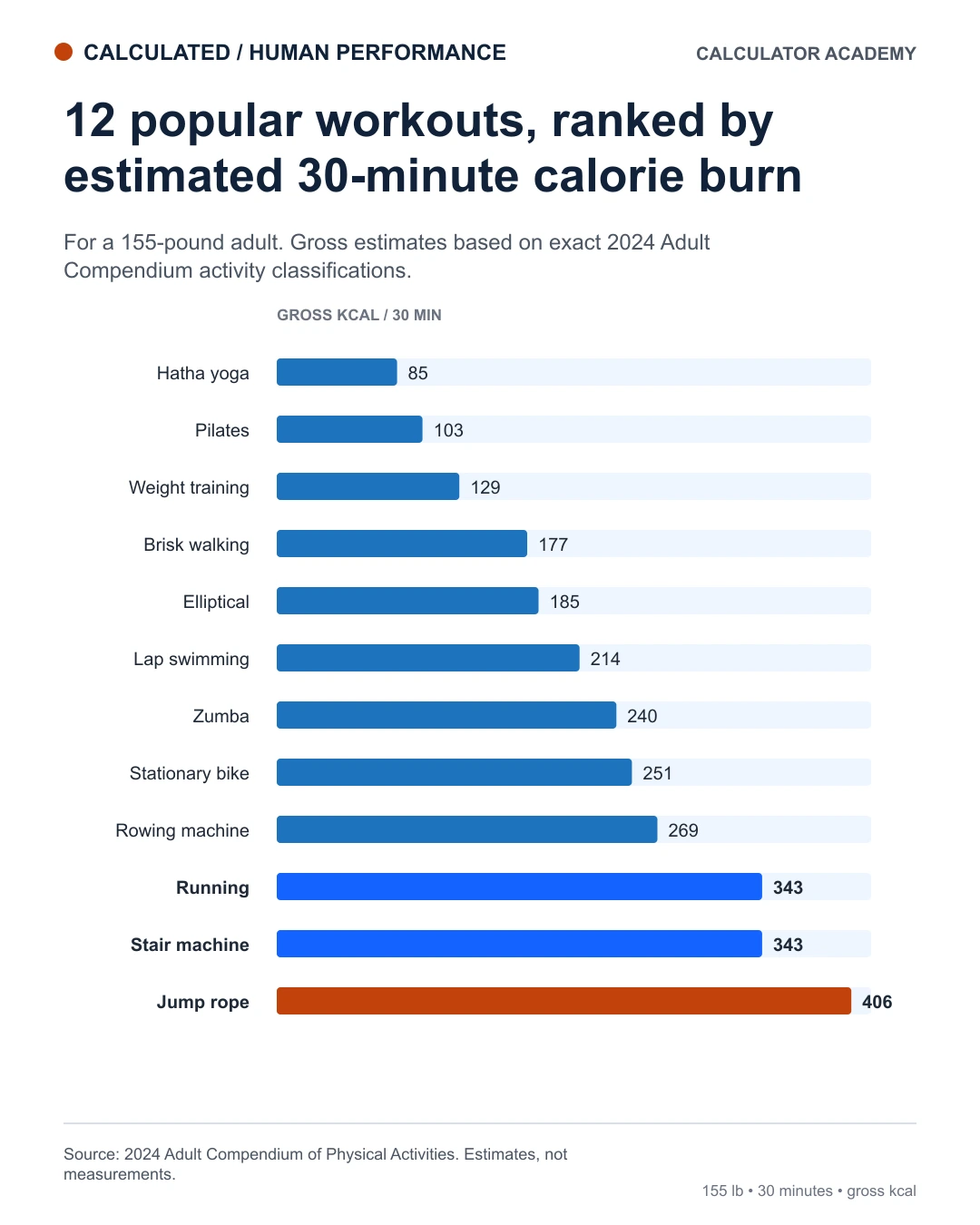
The graphic applies 2024 Adult Compendium MET values to a 155-pound adult exercising for 30 minutes. Estimated gross calories are: Hatha yoga 85; Pilates 103; weight training 129; brisk walking 177; elliptical 185; lap swimming 214; Zumba 240; stationary bike 251; rowing machine 269; running at 6–6.3 miles per hour 343; stair machine 343; and jump rope 406. These are modeled gross-energy estimates, not individual measurements or medical guidance. Exact pace and effort definitions appear in the data table and methodology.
What the numbers show
Jump rope leads this selected set at approximately 406 gross calories, about 4.8 times the Hatha yoga estimate.
Running at 6–6.3 mph and a general stair treadmill both produce 343 calories because the source assigns both classifications 9.3 METs.
Zumba, general stationary cycling, and vigorous rowing fall between approximately 240 and 269 gross calories.
What the comparison shows
The chart applies one weight and one duration to 12 activity classifications so the assigned intensity is the main thing changing.
For a 155-pound adult, 30 minutes of Hatha yoga produces a modeled gross estimate of approximately 85 calories. The same duration of brisk walking is approximately 177 calories, while running at a 10-minute-mile pace is approximately 343.
Illustrative gross-calorie estimates for the 4.8-MET Compendium classification “walking, 3.5 to 3.9 mph, level, brisk, firm surface, walking for exercise.” Each value uses the same formula as the main comparison; estimates are not individual measurements.
The ranking should not be treated as a universal result or as a statement that the highest-calorie activity is the best workout. The Compendium values describe specific paces and effort levels. A change in incline, resistance, cadence, technique, or rest time can materially change the result.
Why two activities tie
Running at 6–6.3 mph and the general stair-treadmill classification both use 9.3 METs in the selected source. Applying the same body weight and time therefore produces the same estimate. It does not mean every runner and stair-machine user burns identical energy.
Weight and duration are fixed, so MET is the only changing input. Running and the stair machine overlap because both selected classifications use 9.3 MET. The straight line represents the calculation, not measured individual outcomes.
Underlying data
Activity
Exact source classification
Compendium code
MET
Gross kcal / 30 min
Hatha yoga
Yoga, Hatha
02150
2.3
85
Pilates
Pilates, general
02105
2.8
103
Weight training
Resistance (weight) training, multiple exercises, 8-15 reps at varied resistance
02054
3.5
129
Brisk walking
Walking, 3.5 to 3.9 mph, level, brisk, firm surface, walking for exercise
17200
4.8
177
Elliptical
Elliptical trainer, moderate effort
02048
5.0
185
Lap swimming
Swimming laps, freestyle, slow, recreational
18240
5.8
214
Zumba
Zumba, group class
02310
6.5
240
Stationary bike
Bicycling, stationary, general
01200
6.8
251
Rowing machine
Rowing, stationary ergometer, general, vigorous effort
02070
7.3
269
Running
Running, 6-6.3 mph (10 min/mile)
12050
9.3
343
Stair machine
Stair treadmill ergometer, general
02065
9.3
343
Jump rope
Rope skipping exercise, general
02068
11.0
406
Make the numbers yours
Change the inputs with a related Calculator Academy tool or inspect the underlying data.
Calories were estimated with 2024 Adult Compendium MET values and the equation gross kcal = MET × 3.5 × body weight (kg) ÷ 200 × minutes.
At 155 pounds (70.3068 kg) and 30 minutes, each MET equals 36.91107 gross kcal. Calculations retain full precision and round only the display values. The CSV field compendium_code_text is an identifier and must be imported as text so leading zeros remain intact.
Caveats and exclusions
Modeled gross calories, not personal measurements or medical guidance. Fixed at 155 pounds and 30 uninterrupted minutes. Actual expenditure varies with age, sex, body composition, fitness, technique, equipment, incline, resistance, environment, rest periods, and other factors. Gross calories include resting expenditure, and exact pace or effort can reorder the comparison.
Cited classifications and factual MET values are used for original calculations and layout; no source table is reproduced. Confirm the displayed article and site licenses before publication.