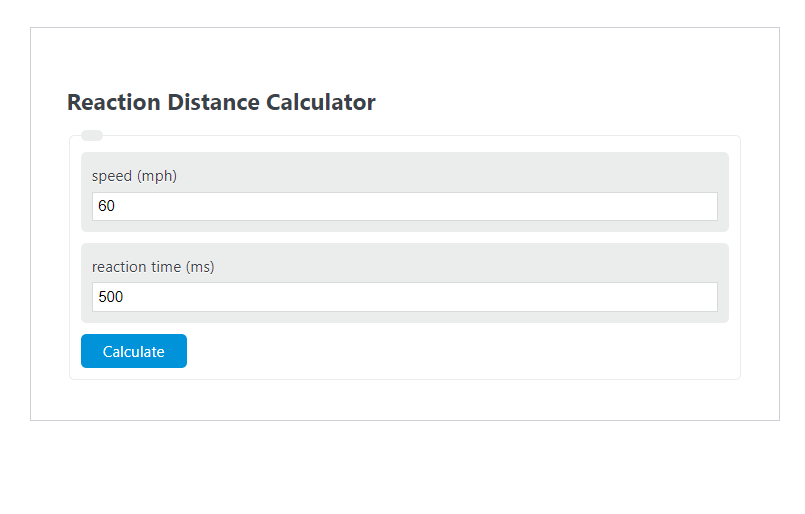
Calculate reaction distance, reaction time, or speed in metric and imperial units, then compare a two-second gap and theoretical braking distance by road grip.
- All Automotive Calculators
- All Distance Calculators
- Stopping Distance Calculator
- Stopping Sight Distance Calculator
- Velocity Calculator
- Constant Velocity Calculator
- Deceleration Calculator
Reaction Distance Formula
Reaction distance is the distance a vehicle travels while a driver sees a hazard, recognizes it, decides to respond, and begins braking. It is the before-braking portion of stopping distance, so both speed and reaction time have a direct effect on the result.
For this calculator, a common unit setup is speed in miles per hour and reaction time in milliseconds. In that case, the equation becomes:
| Symbol | Meaning | Typical units |
|---|---|---|
| Dreact | Reaction distance | ft, m, km |
| v | Speed in a consistent distance-per-time unit | ft/s, m/s |
| S | Vehicle speed | mph |
| T | Reaction time | ms |
| t | Reaction time | s |
Equivalent Forms
The calculator can solve for distance, speed, or reaction time as long as the entered units are compatible.
| Use case | Formula | Output |
|---|---|---|
| Speed in mph, time in seconds | Dreact = 1.46667 × S × t |
ft |
| Speed in km/h, time in seconds | Dreact = (V) / (3.6) × t |
m |
| Solve for speed | v = (Dreact) / (t) |
Distance per second |
| Solve for reaction time | t = (Dreact) / (v) |
s |
When calculating manually, convert the speed into feet per second or meters per second before multiplying by time in seconds. If reaction time is entered in milliseconds, convert it to seconds first.
How to Calculate Reaction Distance
- Determine the vehicle speed.
- Determine the driver’s reaction time.
- Convert the units so they match.
- Multiply speed by reaction time.
Reaction distance scales linearly. If speed increases by 25%, reaction distance increases by 25%. If reaction time doubles, reaction distance doubles.
Examples
Example 1: A vehicle is traveling at 60 mph and the driver’s reaction time is 500 ms.
The vehicle travels 44 ft before the brakes begin to slow it down.
Example 2: A vehicle is traveling at 70 mph and the driver’s reaction time is 350 ms.
The reaction distance is 35.93 ft.
Reaction Distance vs. Stopping Distance
Reaction distance is only part of the total space needed to stop. Once the driver reacts, the vehicle still needs additional distance for the brakes and tires to reduce speed to zero.
This is why vehicles at highway speeds can travel a surprisingly long distance before meaningful deceleration even begins.
What Affects Reaction Time?
- Driver attention: Phone use, in-car distractions, and scanning delays increase response time.
- Fatigue: Tired drivers usually take longer to identify and react to hazards.
- Visibility: Rain, fog, darkness, glare, and blocked sight lines delay recognition.
- Impairment: Alcohol, drugs, and some medications slow perception and motor response.
- Traffic conditions: Complex traffic environments often increase decision time.
- Surprise factor: Unexpected hazards generally produce longer reaction times than anticipated ones.
Tips for Using the Calculator
- Enter any two known values to solve for the third.
- Use milliseconds when you need finer time resolution.
- Match the output unit to your application, such as feet for roadway estimates or meters for metric analysis.
- Use reaction distance together with braking distance when evaluating total stopping requirements.